





What the inside of a spaceship might really look like - PHOTO
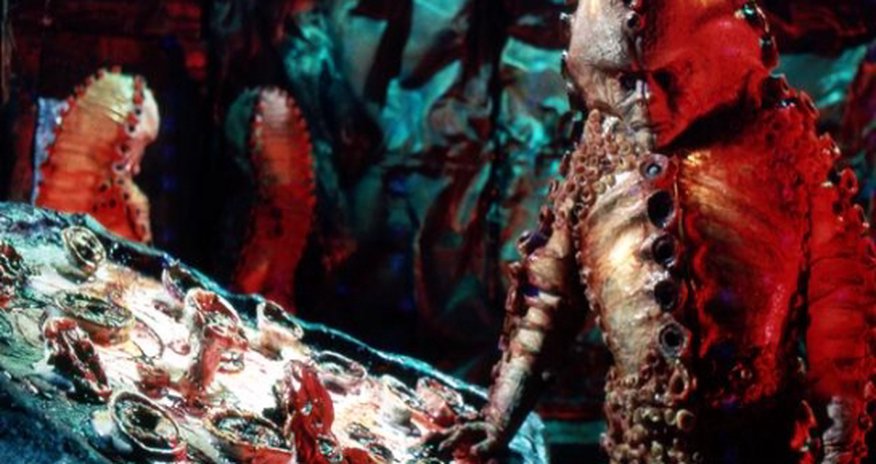


The starship Enterprise has got to be one of the most beautiful fictional spacecraft ever created. But imagine beaming aboard (and I bet many BBC Future readers have) and living there. At first the pristine corridors, groovy minimalist furniture, view screens and food replicators would seem impossibly exciting.However, after a few months, I suspect the sterile interior with its lack of pictures, plants and human clutter would begin to get you down. What starts out resembling a futuristic utopia, soon feels like being trapped in Ikea on a wet Sunday afternoon. What they never show you on TV are the long queues for the holodecks to escape from the unrelenting neatness and cleanliness of it all.While the Federation may be a few years in the future, long duration spaceflight is already a reality. People routinely spend six months in space at a time and, next year, two astronauts are set for a year-long mission to the International Space Station (ISS). When they get there, they will find the interior decor also leaves a lot to be desired, packed as it is with consoles, wires, ducts and equipment.“The inside of the ISS is incredibly sterile,” says Rachel Armstrong, newly appointed professor of experimental architecture at Newcastle University in northeast England. “It’s like living inside a plastic box.”Armstrong is an advocate of making our habitats beyond the Earth – space stations, craft, colonies and starships – much more like our existing giant starship, the Earth. “For us to go beyond mere survival and spend any time in space, we have to learn how to thrive beyond our home planet,” says Armstrong, “and that means thinking of our habitats ecologically.”Artificial environmentsBut this is about much more than having a few pot plants around the place or a few lettuce leaves growing in a sealed incubator. Her point is that on Earth we rely on a delicate and balanced ecosystem to support us. This includes the billions of bacteria that line our gut to help us digest food, the plants we eat and the trees that supply us with oxygen and absorb carbon dioxide; functions that need to be artificially sustained in space.“Other than jumping off the Enterprise to visit a lush planet to pick up some resources, there is no notion of biodiversity or ecology in Star Trek,” says Armstrong. “The idea that we’re going to spend any amount of time in space without any ecological fabric that will promote our survival, it’s a very challenging concept.”Ultimately Armstrong imagines giant floating biomes drifting through the cosmos. Self-sustaining organic spaceships with fields, lakes and mountains, similar to ones I’ve written about before in this column. However, so far any attempts to create large-scale successful closed biological systems on Earth have failed.To cut a long, and somewhat depressing story, short the most ambitious – the Biosphere 2 project, a giant greenhouse complex in the Arizona Desert – ended when oxygen levels dropped, pest species such as cockroaches proliferated and the “crew” fell out with each other. This is why Armstrong differs from many starship dreamers in her desire to start small, to see these ideas implemented in stages.Bacterial cleaningTake one of the most complex systems on the ISS, for instance, the toilet and urine processing system. This $250m device makes boldly going a costly undertaking, using a technologically advanced filtration system to recycle human waste into drinking water.The same process happens on Earth for a lot less money. When we drink tap water – particularly in urban areas – there is a good chance it has already passed through several other people before us. Most of the “cleaning” of that water has been carried out by bacteria or plants in the natural environment – such as a river – or by cultures of bacteria in sewage treatment works. Armstrong advocates a similar adoption of biological systems in space.(BBC)Bakudaily.Az












 Photo




 Video


