





NASA cameras capture huge solar flares
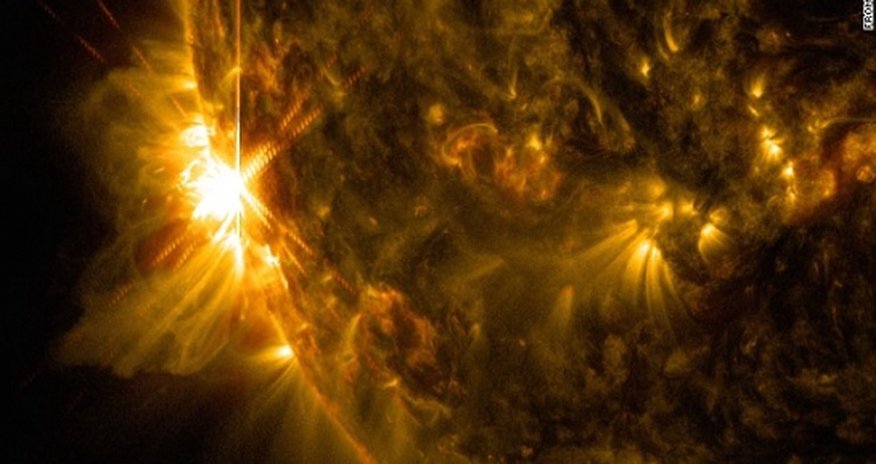


NASA cameras captured images of what the agency is calling at least two "significant" solar flares. The first one peaked at 7:42 a.m. ET Tuesday, followed by a second, lesser blast at 8:52 a.m. ET.The short-lived explosions were expected to disrupt high-frequency radio communications on Earth, although NASA scientists said they pose no threat to humans. Even with all its power, the sun doesn't have enough energy to hurl a fireball 93 million miles at the Earth.Solar flares are powerful bursts of radiation that send gases, plasma and other matter into the solar system. Harmful radiation from a flare cannot pass through Earth's atmosphere to affect humans, but when intense enough, the explosions can disturb GPS and communications signals, NASA said.The first flare was classified as an X2.2 flare, which is unusually bright. Scientists classify solar flares by size, in much the same way they do tornadoes or earthquakes: X-class flares are the biggest and are major events that can trigger planetwide radio blackouts; M-class flares are medium-size ones; and C-class flares are small, with few noticeable consequences here on Earth.The number after the letter provides more information about a flare's strength. An X2 is twice as intense as an X1, an X3 is three times as intense, and so on. A huge flare can be many times larger than the Earth.The second flare Tuesday was classified as an X1.5 flare.The images were captured by NASA's Solar Dynamics Observatory, which typically observes the entire sun 24 hours a day.Solar flares are not uncommon, as such activity has been increasing in recent years. NASA has recorded a handful of large- and medium-size flares already in 2014, although few were as bright as the first one Tuesday morning.To see more about how the flares may affect Earth, visit the National Oceanic and Atmospheric Administration's Space Weather Prediction Center, the U.S. government's official source for space weather forecasts and alerts.(CNN)Bakudaily.az













 Photo




 Video


