





Refugees 'struggle for cancer care'
26.05.2014 14:50


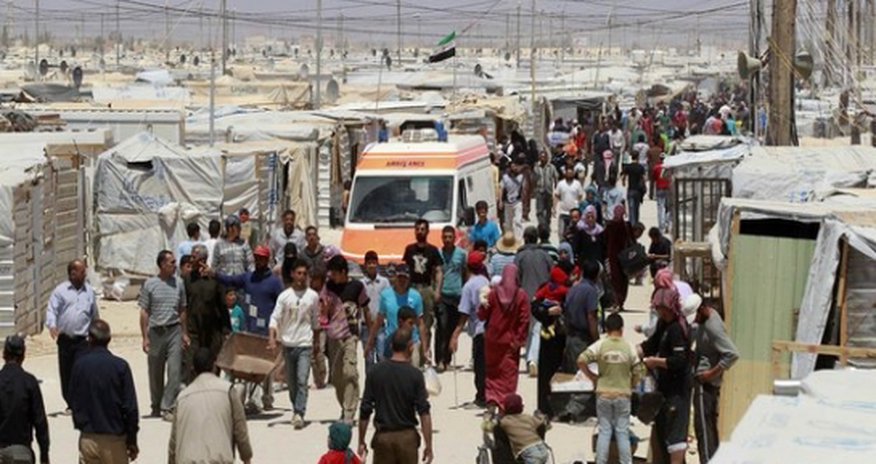
There is a "high demand" for cancer treatment from refugees, which is often difficult to meet, experts say.Infectious diseases and malnutrition have understandably been the focus of refugee health work.But in Lancet Oncology, the United Nations High Commissioner for Refugees says cancer is a major issue that host countries often struggle to deal with.Innovative funding schemes and even screening in refugee camps could help, he said.A team led by Dr Paul Spiegel looked at funding applications made to the UNHCR Exceptional Care Committee (ECC).The ECC assessed 1,989 applications from refugees in Jordan for treatment between 2010 and 2012.About a quarter (511) were for cancer, with breast and colorectal cancer the most common.About half of these cases were approved and funded.Funding applications were rejected if the patient had a poor prognosis or the treatment was too costly.The highest amounts approved in individual cases were $4,626 in 2011 (£2,750) and $3,501 (£2,081) in 2012, the years that were analysed.Strained servicesDr Spiegel said: "The countries in the Middle East have welcomed millions of refugees, first from Iraq and then Syria."This massive influx has strained health systems at all levels."He added: "Despite help from international organisations and donors to expand health facilities and pay for additional personnel and drugs, it has been insufficient."The burden has fallen disproportionately on the host countries to absorb the costs."For example, the Jordanian Ministry of Health footed an estimated $53m bill for medical care for refugees in the first four months of 2013."The authors call for improved cancer prevention and treatment in refugee settings through the use of innovative financing schemes, better primary care in camps including screening, such as mammograms and the development of electronic web-based cancer registries to prevent interruption of treatment.Dr Spiegel added: "Until now, the response to humanitarian crises have been primarily based on experiences from refugee camps in sub-Saharan Africa where infectious diseases and malnutrition have been the priority."In the 21st century, refugee situations are substantially longer and increasingly occur in middle-income countries where the levels of chronic diseases, including cancer, are higher."Cancer diagnosis and care in humanitarian emergencies typifies a growing trend towards more costly chronic disease care, something that seems to have been overlooked, but is of increasing importance because the number of refugees is growing."(BBC)Bakudaily.az


Instagram
Follow us on Instagram
Similar news
Similar news






 Photo




 Video


