





Giant asteroid will be racing past Earth closer than the Moon
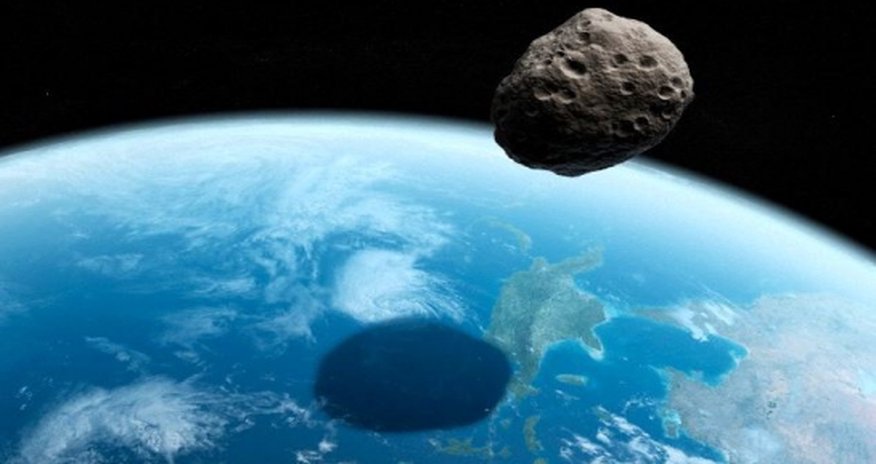


At 21:07 GMT (16:07 EST), the asteroid made its closest approach, reaching a distance of less than 217,000 miles (350,000 km), or nine-tenths of the distance between the moon and Earth.Scientists predicted it would avoid a collision with Earth, but the 98ft (30 metre) asteroid nevertheless offered spectacular views for anyone with a good telescope in their back garden.The Virtual Telescope Project and Slooh set up a live online event sharing real-time images of the asteroid, named 2014 DX110.The site is now showing a brief gif video of the asteroid as it made its closest approach to Earth. A hundred and two images of the DX110 were captured back to back, using the Planewave 17 part of the Virtual telescope, which tracked the movement of the extraterrestrial object as it made its way across the sky. The video can be seen here.It follows huge popularity of asteroid 2000 EM26 last month, with thousands of people stayed up into the early hours in the hope of catching a glimpse of a monster asteroid.But just as the huge space rock came close to the planet’s orbit, the dedicated Slooh website, which promised a live stream of the event, crashed.The hope is the latest sighting will provide better views for those who log on.‘On a practical level, a previously-unknown, undiscovered asteroid seems to hit our planet and cause damage or injury once a century or so, as we witnessed on June 20, 1908 and February 15, 2013,’ Slooh astronomer Bob Berman said in a statement.‘Every few centuries, an even more massive asteroid strikes us — fortunately usually impacting in an ocean or wasteland such an Antarctica.‘But the on-going threat, and the fact that biosphere-altering events remain a real if small annual possibility, suggests that discovering and tracking all near Earth objects, as well as setting up contingency plans for deflecting them on short notice should the need arise, would be a wise use of resources.’2014 DX110 is an Apollo class asteroid, which means it has an Earth-crossing orbit.There are currently 240 known Apollos, but it is believed that there are at least 2000 Earth-crossers with diameters of 1 km or larger.If it hit Earth, an impacting Apollo asteroid would make a crater about 10-20 times its size. (dailymail.co.uk)ANN.Az














 Photo




 Video


