





How do you get a city to lose weight?
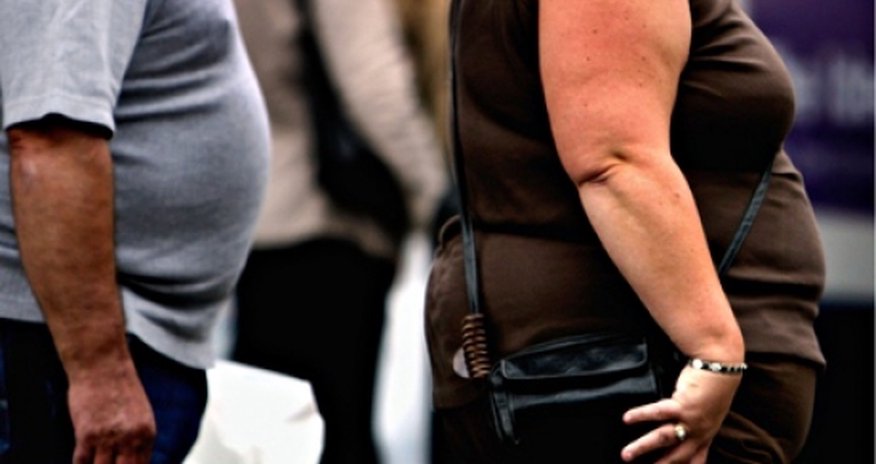


Last year, responsibility for public health was transferred to local authorities, and councils have been looking at how to tackle obesity their own way. Yesterday, it emerged that in a 10-week project in Stoke-on-Trent, 500 people who sign up will be sent texts such as "Use the stairs more" and "Eat fruit and veg", designed to motivate and remind them. PHE advises local authorities on ways to tackle obesity. "We have, for example, produced guidance on the regulation of fast food outlets, with recommendations such as using fast food outlet exclusion zones in school areas," says professor Kevin Fenton, National Director of Health and Wellbeing.You can look further afield to see whether it's really possible to get a whole town or city to lose weight. On New Year's Eve in 2007, the mayor of Oklahoma City, Mick Cornett, announced that his city was going to go on a diet, and lose a collective million pounds. He had been spurred on by his own weight-loss regime, after discovering he was classed as obese – looking around, he saw many of his fellow citizens were too (it had been named as one of America's fattest cities). And he had an idea why that may be – like many American cities, it had been built around the car.He discovered the city had built neighbourhoods with poor "walkability" – for some time developers hadn't even built pavements. To combat all this, a redesign of areas of the city started. Jeff Speck, a city planner and author of Walkable City: How Downtown Can Save America, One Step at a Time, helped advise on the redesign of Oklahoma City's downtown area. "I could say welcome to the club," says Speck with a grim laugh, when he hears about PHE's figures. "We have been able to map neighbourhoods based on their walkability – we use something called 'walkscore'. It's something that seems obvious but we have to prove it, and we've been able to document that more suburban, less walkable parts of the world are the ones that rank the highest for weight. There's a new term for these places: obesogenic. As we've designed our country around the assumption of universal car ownership and use, we've created a landscape in which walking is no longer serving any purpose.To get people walking, he says, that walk needs to be able to compete with the car: "It needs to be simultaneously useful, safe, comfortable and interesting." In Oklahoma City, for instance, pedestrian safety was improved by encouraging kerbside parking to act as a buffer between pavement and road, and turning one-way streets back into two-way (one-way streets, particularly multiple-lane ones, encourage drivers to go faster). "Comfortable has to do with shaping the spaces of buildings, which is why walking along a parking lot is horrible, and interesting has to do with signs of humanity and life – doors, windows, eyes on the street," says Speck. "You can do all you want to get your city excited about walking, but if you want to have a long-term impact on behaviour and health you have to change the city." Can every city do that? "Absolutely."We've got a long way to go," says Cornett. "But what it feels like is we're having a full conversation about health – we're talking about obesity, and people understand how problematic it is. And we're changing our infrastructure." Have people responded well? "Oh sure. People appreciate the idea that we're becoming a more walkable community. They like the sidewalks being built, that we're connecting schools with neighbourhoods, that we're completing our bicycle trail masterplan [100 miles of cycle paths]."It hasn't proved an instant cure and as a state, Oklahoma still ranks among America's unhealthiest. Cornett describes his city's steps as "like turning around a ship. You can't turn it around really fast. It feels like we've made the turn but it will take a generation to complete the cycle."(theguardian.com)ANN.Az












 Photo




 Video


