





The bad blood between Russia and Turkey is spreading to Armenia and Azerbaijan
04.12.2015 12:00


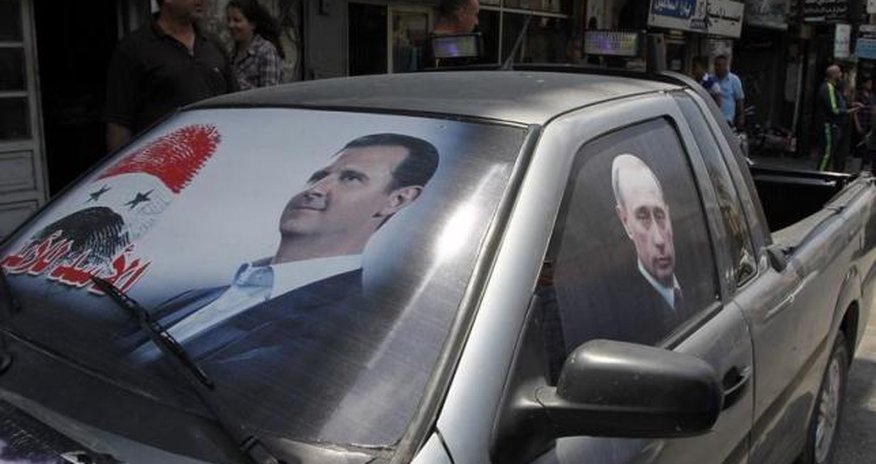
Escalating tensions between Russia and Turkey have spread to the Caucasus, a volatile region where both powers have long contested each other's influence.
After Turkish jets shot down a Russian warplane that allegedly flew into Turkish airspace last week, a Cold War-style war of words erupted between Ankara and Moscow. Turkey has refused to apologize for the incident, while Russia has blocked sales of tourism packages to Turkey, imposed sanctions on Turkish fruits and vegetables, and accused Turkey of buying oil from the Islamic State.
Now the two sides are squaring off over the ongoing conflict between Armenia and Azerbaijan, two tiny former Soviet republics that have been at loggerheads since a six-year war over an ethnic Armenian enclave in Azerbaijan called Nagorno-Karabakh ended in 1994.
"This is largely talk right now, but the problem is neither Turkey nor Russia really need war in the Caucasus," said Paul Stronski, a senior associate at the Carnegie Endowment for International Peace. "The situation between Armenia and Azerbaijan has been pretty dangerous already. It's clear that things can easily get out of hand."
Armenia, a Russian ally, now controls Nagorno-Karabakh. But most of the international community recognizes the enclave as part of Azerbaijan, a Turkish ally. Russia maintains a military base in Armenia, which experts say has had a stabilizing influence.
"For 15 years, Russian support for Armenia has kept Azerbaijan from mounting another viable challenge to retake Nagorno-Karabakh," according to a recent analysis by the intelligence company Stratfor, which added that Azerbaijan has recently increased its cross-border raids and shootouts against Armenian forces. The Stratfor report suggested that Azerbaijan's bolder stance reflects its growing political clout in the region.
Azerbaijan is an ethnically Turkic, Muslim country with a 1,100-mile pipeline that brings oil to Turkey via Georgia, bypassing Russia and undercutting Moscow's influence in the region's energy sector.
Turkey has come down firmly on Azerbaijan's side in the conflict over Nagorno-Karabakh. On November 26 — two days after the Russian plane went down — Turkish Prime Minister Ahmet Davutoglu rattled his saber in the dispute. "Turkey will do everything possible to liberate the occupied territories of Azerbaijan," he said, according to Kommersant, a Russian newspaper.
Russian Foreign Minister Sergei Lavrov visited Armenia on November 9, according to Stratfor. At the time, the visit was billed as a potential move to de-escalate the friction between the two sides. Azerbaijan is an authoritarian state that conceivably could be closer to Moscow. But the downing of the jet has complicated those efforts. Davutoglu is slated to journey to Azerbaijan for a one-day visit on Thursday.
In Russia, policymakers are doubling down on their alliance with Armenia at the expense of Turkey. A day after the Russian jet went down, Russian lawmakers proposed a $7,500 fine on citizens who deny the 1915 genocide of Armenians by the Ottoman Empire — the Islamist predecessor to today's Turkish republic, Radio Free Europe reported.
Armenia claims Ottoman troops exterminated 1.5 million Armenians in the waning days of World War I by killing fighting-age men and forcing women, children, and the elderly to march through the Syrian desert without food and water. Turkey denies the deaths qualified as genocide, and has laws that prohibit books or statements acknowledging it occurred.
Taner Akcam, an expert in the Armenian genocide at Clark University in Massachusetts, said it's common for Turkey's antagonists to bring up the issue. Individually, the proposed Russian law was no big deal, he said. As part of a larger context, however, he was concerned about it.
"It won't have any effect. Everyone in Turkey understands it's a political issue, and people will laugh at it," Akcam told VICE News. "The Armenia- Nagorno-Karabakh-Azeri issue is more serious. I don't think the genocide recognition is a serious problem for Turkish-Russian relations. Turks will say 'So what?' But if things develop into a proxy war in the Caucasus, this is something very serious and something very scary."
(Vice News)
www.ann.az


Twitter
Follow us on Twitter

Similar news
Similar news
Political News 16:00
Pashinyan Announces Forthcoming Draft Constitution, Does Not Rule Out Early Elections






 Photo




 Video


