





Welcome to the new temples of pleasure
17.12.2014 10:30


It's a vision of biblical proportions -- tens of thousands of people weeping, whooping, and chanting in unison.
If sport were a religion, then the stadium would surely be its place of worship.
Inside these temples to physical feats, language evokes the divine -- fearful fans "pray for a miracle," while losing prompts serious "soul-searching."
So much so that architects these days must create more than a stage for human endurance.
It's as if they have been asked to perform the architectural equivalent of feeding the 5,000 with five loaves and two fish -- constructing an arena to elevate the senses, capture the spirit of a community, and become an icon for a city long after the last fan has passed through the turnstiles.
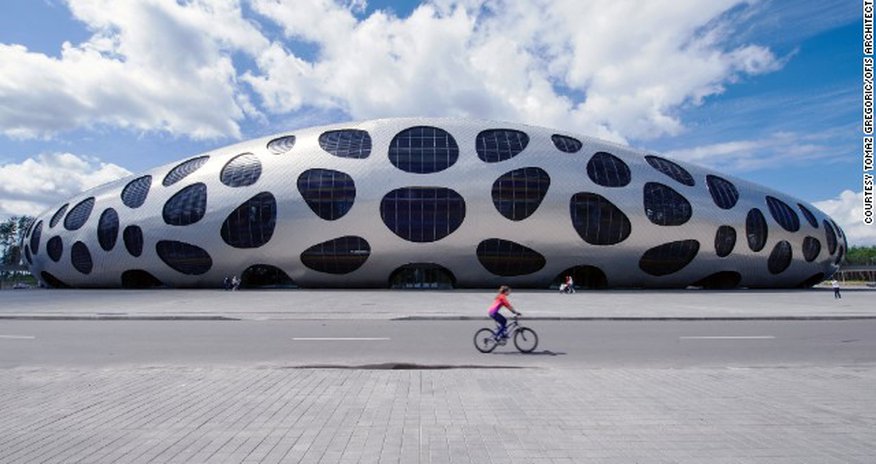
"It's like creating a contemporary cathedral in some ways," said Spela Videcnik, architect behind the sci-fi "spotty" Borisov Arena, home to the Belarus national football team.
Often the stadium is meant to become the pride of a city, a landmark object, and as such, a monument representing the latest achievements in architecture."
Since ancient Greeks built the first Olympic stadium in fine white marble, the arena has been as much about inspiring awe, as staging competition.
Today's architects must go even further.
Return to Roman times?
In an age where sporting events are captured on television in brilliant detail, designers must lure us from the comfort of living rooms with multipurpose entertainment centers.
No longer relegated to the outskirts of town, these modern-day social hubs are creeping inside our metropolises once more -- and they have more in common with historic cathedrals than you might think.
"Look at the ancient Greek and Roman stadiums -- they're very much in the middle of the city," said Hubert Nienhoff, veteran German architect behind the redeveloped Berlin Olympic Stadium, and Amazon Arena at this year's World Cup in Brazil.
"But in the last 50 years, the stadium became something that was not really integrated, they were built outside the cities. They were for people who went there perhaps once a week for an event."
While arenas like the Colosseum in the heart of Rome occupy real estate today's architects could only dream of, we may soon see a return to centralized social spaces of old, says Nienhoff.
"Now we're bringing in multiple uses for stadiums again, like shops and conference halls," he said.
"In the future they will not be outside the city but, something like the cathedrals of the Middle Ages, they will be a vital part of city life."
A key part of this vision, however, will depend on improved transport infrastructure.
(CNN)
ANN.Az


Instagram
Follow us on Instagram
Similar news
Similar news









 Photo




 Video

