





Azeri female winner for Fields maths medal
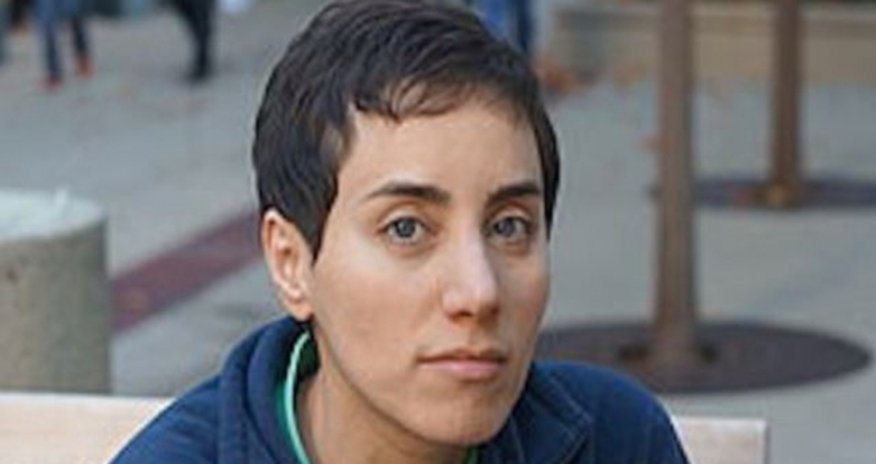


In a landmark hailed as "long overdue", Prof Maryam Mirzakhani was recognised for her work on complex geometry.Four of the medals will be presented in Seoul at the International Congress of Mathematicians, held every four years.Also among the winners was Prof Martin Hairer from the University of Warwick, UK, whose work on randomness could prove useful for climate modelling.Awarded by a committee from the International Mathematical Union (IMU), the Fields Medal is regarded as something akin to a Nobel Prize for maths. It was established by Canadian mathematician John Fields and comes with a 15,000 Canadian dollar (£8,000) cash prize.First awarded in 1936 and then every four years since 1950, the medal is awarded to between two and four researchers, who must be no older than 40, because Fields wanted to encourage the winners to strive for "further achievement" as well as recognise their success.The other two medals were won by Dr Artur Avila, a Brazilian mathematician who earned his PhD in dynamical systems at the age of 21, and Prof Manjul Bhargava, a Canadian-American number theorist at Princeton University.'Icing on the cake'In becoming the very first female medallist, Prof Mirzakhani - who teaches at Stanford University in California - ends what has been a long wait for the mathematics community.Prof Dame Frances Kirwan, a member of the medal selection committee from the University of Oxford, pointed out that despite being viewed traditionally as "a male preserve", women have contributed to mathematics for centuries.She noted that around 40% of maths undergraduates in the UK are women, but that proportion declines rapidly at PhD level and beyond."I hope that this award will inspire lots more girls and young women, in this country and around the world, to believe in their own abilities and aim to be the Fields Medallists of the future," Prof Kirwan said.Prof Sir John Ball, another British mathematician and a former president of the IMU, agreed that Prof Mirzakhani's win was "fantastically important". Speaking to BBC News from the congress in Seoul, South Korea, he said that a female winner was overdue and that Prof Mirzakhani is one of many brilliant women mathematicians.He added that the committee had an unenviable job choosing the winners. "These four are really deserving of this recognition, but of course any work at this level also builds on exceptional work by other people."Prof Mirzakhani's seminal research concerns shapes called Riemann surfaces. These are convoluted mathematical objects that can be analysed using complex numbers - i.e. numbers with real and imaginary parts.In particular, she has studied "moduli spaces" of these shapes, which map all of the possible geometries of a Riemann surface into their own, new space.Prof Alison Etheridge, a lecturer in applied mathematics at the University of Oxford, said she was thrilled by the announcement."Women are doing so well now in mathematics that this is just icing on the cake," she told the BBC. "It's the sort of thing which will really catch the public's imagination - and as a result I think it could have quite an impact on a new generation."Randomness in realityProf Etheridge is more familiar with the work of the medallist from Warwick, Martin Hairer."I think Martin has done some of the most remarkable mathematics," she said."Traditionally, maths has been quite divided into pure and applied. But what has happened over the past decade or so, is that people have realised that to do modern applied mathematics, you really need a whole armoury of techniques from pure mathematics - especially if you're going to take account of random effects."What Martin's work does is it allows you to take account of randomness in a way we just didn't think was possible."Prof Hairer's award is specifically for his contribution to a particular type of equation, known as a partial differential equation or PDE. His theory allows mathematicians to predict how physical processes will develop when they contain elements of randomness.A key example is modelling how the boundary changes over time between two different substances. Prof Terry Lyons, a colleague of Prof Hairer's at Oxford, uses the example of the interface between ash and paper, when a sheet is slowly burning."But the sort of examples that it applies to in the longer term are boundless," Prof Lyons added, noting that climate science in particular was "where it might end up"."Martin has tackled a fundamental problem and achieved a complete step-change in our understanding of it."(BBC)Bakudaily.Az














 Photo




 Video


