





S&P says three Azerbaijani bank outlooks are now negative
29.05.2020 00:21


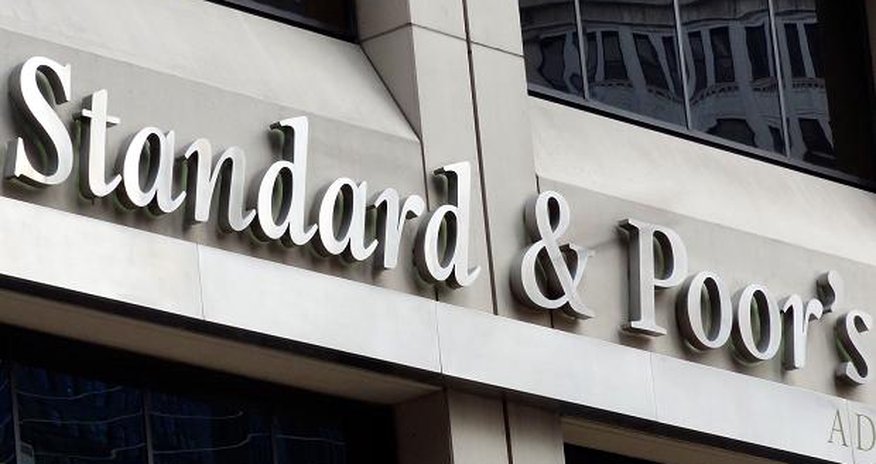
Standard & Poor's Ratings Services said that it had revised its outlook on Azerbaijan-based Kapital Bank OJSC to negative from stable. The 'BB-/B' long- and short-term counterparty ratings were affirmed.
At the same time, the agency affirmed its 'BB-/B' long- and short-term counterparty credit ratings on PASHA Bank, and its 'B-/C' long- and short-term counterparty credit ratings on Muganbank. The outlooks on both banks remain negative.
The rating actions follow the lowering of ratings on Azerbaijan to 'BB+/B' from 'BBB-/A-3'.
"In our opinion, economic risks for Azerbaijani banks have increased because of expected contraction of GDP in 2016, the local currency's sharp depreciation in 2015, and increased credit risk in the economy, largely due to the drop in oil prices," S&P said. "As a result, we have revised our assessment of Azerbaijan's banking industry to group '9' from group '8' under our Banking Industry Country Risk Assessment methodology. In turn, this has led us to revise our anchor for rating banks operating in Azerbaijan to 'b+' from 'bb-'. We view the economic risk trend in Azerbaijan as negative and believe that the worsening environment could weigh on domestic banks' financial standing through deteriorating asset quality. This will likely result in higher provisioning needs, which could erode banks' capital bases."
"Azerbaijan remains heavily dependent on the hydrocarbons sector, which accounted for about 40% of GDP and 95% of merchandise exports in 2013-2014. Furthermore, last year the foreign exchange reserves of the Central Bank of Azerbaijan (CBA) reduced by more than 40% in six months to about $5 billion, compared with a peak of about $15 billion at midyear 2014. The CBA subsequently abandoned its peg of the manat to a basket of dollars and euros, causing the local currency to weaken by more than 30% against the U.S. dollar by year-end 2015. Even though the manat's depreciation will help the CBA
protect its remaining foreign exchange reserves and ease fiscal pressures, it will also lead to a significant decline in income levels. In particular, we expect that GDP per capita will fall to about $4,100 in 2016 from nearly $8,000 in 2014, while inflation will likely soar to 15% this year from an average of 2% over 2012-2015."
www.ann.az


Telegram
Follow us on Telegram


Similar news
Similar news








 Photo




 Video


