





The future: Airplanes that fix themselves?
29.05.2020 08:26


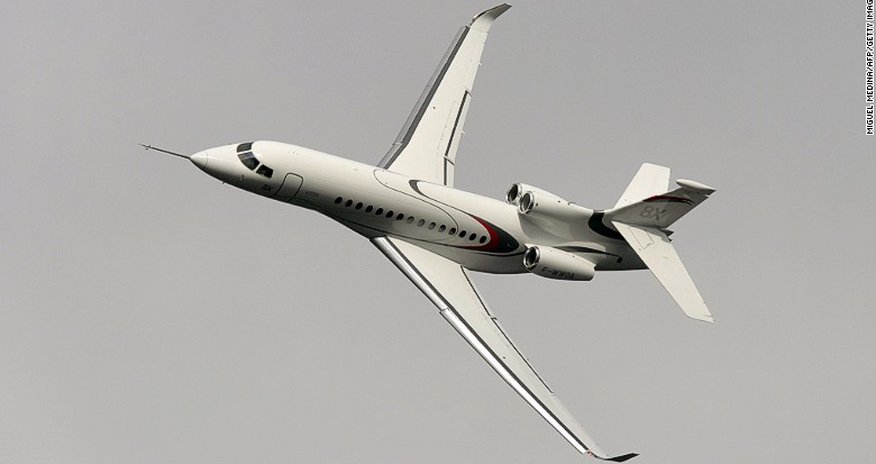
It may sound like a line from a sci-fi novel, but scientists believe that in the near future airplane wings will be able to fix themselves on the go.
A team from Bristol University in England has developed technology that could repair cracks on an aircraft in a similar way that human skin heals.
Their research has focused on carbon fiber reinforced composite materials, which are commonly used to make sports equipment and, increasingly, the modern generation of aircraft. They have created tiny micro-spheres -- hollow capsules so small that several could fit across the width of the human hair -- which are filled with a healing agent and then planted into the composite material.
On impact these spheres crack, and when the liquid comes into contact with a catalyst, which is also planted into the material, it causes it to harden and literally glue the crack together.
"Our approach here is to take the inspiration from the human body in that if we get damaged, we have the mechanisms to repair that damage," says professor Duncan Wass, the lead researcher on the project alongside professor Ian Bond and Dr. Richard Trask.
"If you cut your finger, eventually it will heal, so we thought, can we apply that sort of idea to these man-made structures? So that's what we've done," he adds.
At the moment, the technology can only help to fix very small cracks, rather than any significant structural damage. However it's precisely those tiny rifts that can often lead to bigger problems, which can endanger an aircraft if undetected.
And rather than coat the entire airplane in micro-spheres, scientists say they could use existing knowledge about aircraft structure to target areas deemed to be of higher risk.
Self-healing technology is not entirely new. For instance, car paint that can self-repair fine scratches already exists.
However, professor Wass warns that in the context of airplanes, it takes a lot more than just restoring the way a surface looks.
"We're talking about structural materials here, it's not enough for it just to look the same, it's got to be strong," he says.
Scientists also have to find a way to make the technology work equally well across different environments.
"The problem we have is that if an airplane is flying, it's very cold when you're at high altitude, or it might be on runway in Dubai and it's 40 degrees, and actually getting it to heal the same across those temperatures is the technical challenge that we have," says professor Watts.
Ironing out all the technical problems isn't the only requirement for self-fixing planes to enter the market, as it also depends on the airline industry's interest and willingness to bring them on board.
Boeing says the company has spent a number of years researching self-healing coating and other related technologies.
"However, it is too early to speculate how research in this area may be incorporated into any product or service," says a spokesman.
Professor Wass agrees that we won't be jumping on any self-fixing jets just yet.
The technology, which is funded by the Engineering and Physical Sciences Research Council and UK Catalysis Hub, is still five to 10 years away from being developed enough to be implemented.
"We had the concept early on but the devil is in the detail in getting it to work," he says. "For aerospace applications where safety is absolutely critical we're probably a long way off," says Wass.
However, other uses could come in the near future, such as in offshore wind turbine blades.
"They're out in the sea, very high and difficult to reach, we can imagine applying there sooner," says professor Wass.
"Many more consumer items -- sports equipment, bicycle frames, you can imagine in much nearer terms, maybe two years before we can start to see these things happening," he says.
What seems certain, however, is that the dawn of the self-healing airplane is upon us.
(CNN)
www.ann.az


Twitter
Follow us on Twitter

Similar news
Similar news











 Photo




 Video


