





Saudi Arabia carrying out 'unprecedented wave' of executions
04.12.2015 14:00


An artist sentenced to death for apostasy. Three young Shia Muslims - arrested when they were minors - faced with beheading. And reports in the Saudi press of the imminent execution of more than 50 people.
Saudi Arabia's use of the death penalty has sparked international alarm.
The country's human rights record has been back in the news since January, when liberal blogger Raif Badawi was flogged after being convicted of insulting Islam.
That same month, disturbing video emerged of a Burmese woman accused of murder screaming: "I did not kill" until the moment her head was severed with a sword on a Saudi street.
So far this year, more than 150 people have been executed - the highest figure recorded by human rights groups for 20 years.
Dozens of them were convicted of non-violent crimes, including drug offences. Human rights activists say many of the trials were unfair.
Lack of transparency
Amnesty International has described "an unprecedented wave of executions marking a grim new milestone in the Saudi Arabian authorities' use of the death penalty".
So what is behind the rise of executions? A lack of transparency in the Saudi legal system makes it difficult to know.
"There's a lot of speculation," says Adam Coogle, who monitors Saudi Arabia's use of the death penalty, for Human Rights Watch. "But nobody knows the real answer because the Saudis haven't said, and they won't say."
This year has been an eventful one for Saudi Arabia. In January, King Salman succeeded his more liberal brother, King Abdullah, ushering in a new, more muscular foreign policy.
In March, the Saudis began a bombing campaign in Yemen against Houthi rebels in which thousands of civilians have been killed. And the Hajj stampede put the country under an uncomfortable spotlight.
Sunni extremism has remained a constant threat, with the Islamic State (IS) group or its affiliates killing at least 50 people in the Shia east and south of the country.
But the increase in the rate of executions actually began back in August 2014, according to human rights activists.
"Nearly all of those executed are sentenced on murder or drugs charges, and it's possible that the crime rate is going up, with more murders and more people bringing drugs into the country," says Mr Coogle.
Appearing tough
Another theory is linked to Saudi Arabia's restructuring, over the past few years, of its justice system.
"It could be that, with the increase in the number of courts and judges, the system has the capacity to address a backlog of cases," Mr Coogle says.
A third theory is that it is part of a trend in the whole region towards more executions, with a steep increase in the use of the death penalty in Pakistan, and Jordan ending a moratorium on executions last December.
"There's a sense in which regional instability is encouraging leaders to try to appear tough," says Mr Coogle.
Among those facing execution are al-Qaeda militants, as well as Shia dissidents involved in an uprising in the east of the country that began in 2011.
"The death sentences are retribution against Shia protesters, some of whom were peaceful and some of whom may not have been," says Mr Coogle.
"There's a clear message that if you take to the streets to challenge the house of Saud, you may pay the ultimate price."
Capital punishment in Saudi Arabia
Beheading with a sword is the most common form of execution.
Executions are often carried out in public.
Crimes that carry the death penalty include murder, adultery, treason, gay sex, drug offences, sorcery and witchcraft, and apostasy.
Human rights activists say those accused often do not receive fair trials.
The families of prisoners facing the death penalty are not always informed in advance of executions.
The case of the young Shia protester, Ali al-Nimr, who has become a poster boy for those facing execution, has drawn appeals from world leaders for King Salman to show mercy and refuse to sign his death warrant.
He was convicted of a string of offences, including attacking police with petrol bombs in anti-government protests in the east of the country when he was only 17 and still at school.
His family says the confession he made was coerced and he signed it after being told he would then be released.
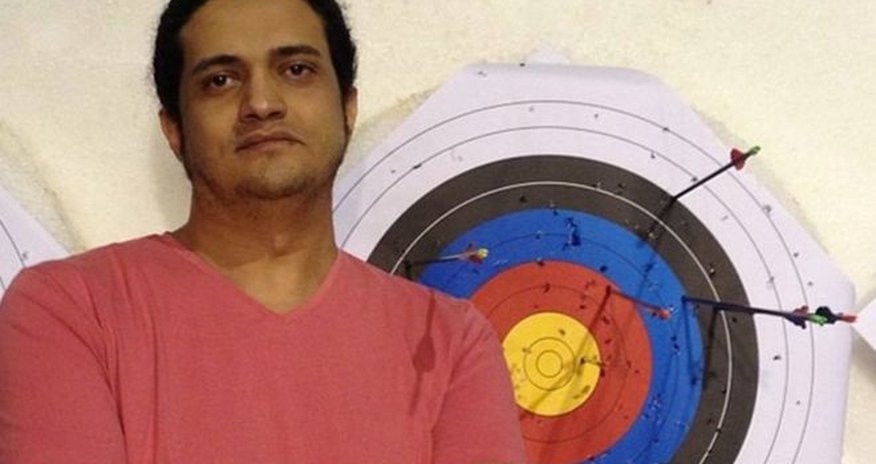
The fate of Palestinian poet and artist Ashraf Fayadh, 35, has also attracted international condemnation.
He was sentenced to death last week for apostasy, based on a book of poetry he wrote several years ago.
UN human rights experts say the sentence is in violation of international human rights law.
'Vicious' crackdown
Hundreds of poets and writers from around the world have also called for his release.
"The death sentence against Fayadh is the latest example of the kingdom of Saudi Arabia's lack of tolerance for freedom of expression and ongoing persecution of free thinkers," they said.
Indeed, when a Twitter user described Mr Fayadh's sentence as "Isis-like", one newspaper quoted a justice ministry official threatening to sue.
"Executions are not the only serious human rights concern," says Sevag Kechichian, Saudi researcher for Amnesty International.
"There's been a vicious and systematic crackdown on human rights activists and on peaceful dissent in general - including bloggers and online activists.
"If you are on the UN Human Rights Council, then you are obliged to uphold the highest standards in promoting and protecting human rights."
Saudi Arabia, controversially, became a member of the UN Human Rights Council in 2013, for a three-year term.
Leaked diplomatic cables released earlier this year suggest British and Saudi diplomats agreed to support each other's election to the 47-member council.
The Saudi authorities reject international criticism over their human rights record, saying their legal system - based on Sharia principles - should be respected.
Reported executions in 2014:
China: figures not collated as details are a state secret
Iran: at least 289
Saudi Arabia: at least 90 (and at least 150 in 2015 so far)
Iraq: at least 61
USA: 35
Sudan: at least 23
Yemen: at least 22
Egypt: at least 15
Somalia: at least 14
Jordan: 11
Equatorial Guinea: 9
Pakistan: 7
Afghanistan: 6
Taiwan: 5
Belarus: at least 3
Vietnam: at least 3
Japan: 3
Malaysia: at least 2
Palestinian territories: at least 2
Singapore: 2
United Arab Emirates: 1
(BBC)
www.ann.az


Facebook
Follow us on Facebook


Similar news
Similar news

World 12:30
Iran Urges Middle East Nations to Reject US Military Support, Warns of Retaliatory Strikes











 Photo




 Video


