





200,000 Syrians face food shortage
18.01.2016 11:26


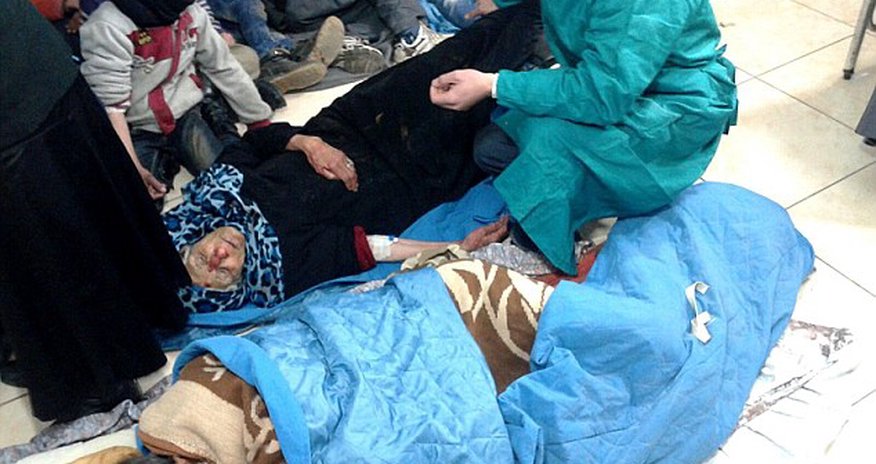
Up to 15 to 20 people have died of starvation in the Syrian eastern city of Deir Ezzor last year and 200,000 residents - mostly women and children - face sharply deteriorating conditions in its western side, which is under siege by ISIS, according to a United Nations report.
Islamic State militants have closed access to the city since last March, leaving inhabitants with no electricity for more than 10 months.
The restrictions led to a severe shortage of food, medicine and basic commodities. Water to the area is supplied for only three hours a week.
A ban on all commercial and humanitarian access into the besieged city, as well as the inability of residents to move outside of the city, has caused a significant deterioration of living conditions there.
ISIS militants constantly interrogate and harass people leaving the city and confiscate their documents.
Of those under siege in the city, 70 percent are women and children, and many have been displaced from their homes elsewhere and are living in temporary shelters.
Deir Ezzor is the most populous of about 15 besieged areas in Syria, where about 450,000 people are trapped and cut off from aid by the government, Islamic State and other insurgent groups.
Another besieged town, Madaya, has received two convoys of aid supplies this month.
However, international medical humanitarian organisation Doctors Without Borders/Médecins Sans Frontières (MSF) confirmed that a total of 35 people died from starvation since December, citing the local MSF-supported doctors.
Twenty-three patients died of starvation in Madaya in December; five more died on January 10, and another two died on January 11 as the first convoy, from the United Nations, International Committee of the Red Cross, and Syrian Arab Red Crescent was en route; the last five dead were reported on Friday 15 January.
In Deir Ezzor, the only remaining civilian hospital in the besieged city is suffering from a severe lack of medicine, supplies and health personnel and cases of Leishmaniasis and Typhoid have been reported due to poor sanitation.
'Severe cases of malnutrition are reported by health personnel particularly amongst children with unverified reports of 15 - 20 people dying from starvation in 2015 (of whom four were children),' the report said.
'All schools are functioning in the city however absenteeism amongst children is common as children suffer from frequent fainting due to malnutrition,' it added.
On January 11, the Syrian government airlifted 'a limited amount of basic commodities' including food to be sold at Damascus prices. Russia said on Friday it had dropped 22 tonnes of aid.
A government grain reserve and a very small patch of government-controlled land can continue to provide grain for two main functioning bakeries for 'many months', but a lack of fuel and yeast has boosted black market bread prices to eight times the price in the capital, Damascus.
'Families have to queue for hours to get their share of bread with the majority of inhabitants surviving on bread and water,' said the report from the U.N. Office for the Coordination of Humanitarian Affairs (OCHA).
The report comes as ISIS announced it had abducted at least 400 civilians including women and children after capturing new territory in an assault on Deir Ezzor.
Activists from the London-based Syrian Observatory for Human Rights said they believed ISIS rounded up the civilians following an attack on the north of the city.
'After their attack on Deir Ezzor yesterday, IS abducted at least 400 civilians from the residents of the Al-Baghaliyeh suburb it captured and adjacent areas in the northwest of the city,' the Syrian Observatory for Human Rights said.
(dailymail.co.uk)
www.ann.az


Twitter
Follow us on Twitter

Similar news
Similar news
World 12:30
Iran Urges Middle East Nations to Reject US Military Support, Warns of Retaliatory Strikes











 Photo




 Video


