





First sexually transmitted case of Zika virus is confirmed
03.02.2016 19:30


A patient diagnosed with the Zika virus in Texas became infected after having sexual contact with another sufferer, health experts said today.
It marks the first case of sexual transmission of the virus in the US, the Centers for Disease Control and Prevention confirmed.
Dallas County health officials said the patient's partner fell ill after visiting a country where Zika is rife.
While six people in Harris County, close to Houston, have contracted the disease after traveling to affected regions, this is thought to be the first case of a person becoming infected on US soil, having not traveled.
Zachary Thompson, director of Dallas County Health and Human Services, said: 'Now that we know Zika virus can be transmitted through sex, this increases our awareness campaign in educating the public about protecting themselves and others.
'Next to abstinence, condoms are the best prevention method against any sexually-transmitted infections.'
Sexual transmission of the virus is very rare. It was found in one man's semen in Tahiti, and there was report of a Colorado researcher who caught the virus overseas and apparently spread it to his wife back home in 2008.
Noting the 2008 case in Colorado, Professor Peter Horby, an emerging infectious disease expert at the University of Oxford, said the report from Dallas is 'not entirely unexpected, but certainly unwelcome'.
He said: 'It adds weight to the evidence that sexual transmission is a real risk, and raises many questions and dilemmas.
'What is the magnitude of the risk of sexual transmission? The majority of Zika infections are asymptomatic - is there a risk of sexual transmission from people who had asymptomatic infection? For how long can sperm be infectious?
'This highlights our ignorance of this virus and the need for an urgent, comprehensive and coordinated research response.'
Meanwhile Dr Derek Gatherer, lecturer in biomedical and life sciences at Lancaster University, said: 'The main implication is that unprotected sex should be avoided both when visiting affected areas, and also after recovery from any feverish illness contracted during visits to such an area until absence of virus in seminal fluid can be confirmed.'
Furthermore Professor Luis Cuevas, of the Liverpool School of Tropical Medicine said though the risk of sexual transmission is rare, the advise is for people diagnosed with Zika virus to use condoms for six months after infection.
Those people who fear they may have been exposed, though not confirmed, should use condoms for one month after returning from an infested area, he added.
'There is no systematic information on the duration of excretion of the virus in sexual secretions and studies are needed to document whether it remains infectious beyond a few weeks,' Professor Cuevas said.
'It is thus advisable adults exposed to Zika follow the recommendation of using condoms until more information becomes available.'
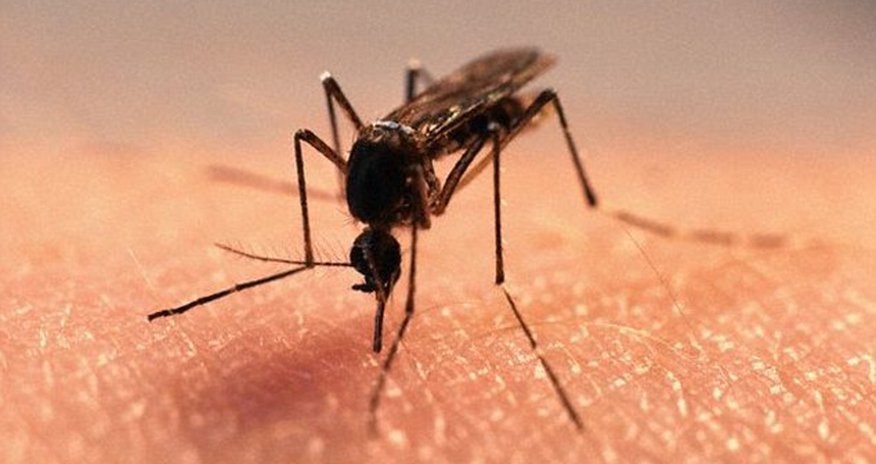
More often, sufferers become infected after being bitten by a mosquito carrying the virus.
In the vast majority of cases the virus triggers mild symptoms, including fever, rash, joint pain and conjunctivitis.
However, the World Health Organisation yesterday declared the current outbreak of Zika virus, predominantly in South America, a global public health emergency.
WHO director-general Dr Margaret Chan said she was moved to do so, after growing evidence the virus can trigger potentially life-threatening birth defects in newborn babies.
In assessing the level of threat, Dr Chan said 18 experts and advisers looked in particular at the strong association, in time and place, between Zika infection and a rise in cases of microcephaly - where a baby is born with a small or incomplete brain.
Dr Chan said: 'The experts agreed that a causal relationship between Zika infection during pregnancy and microcephaly is strongly suspected, though not yet scientifically proven.'
Dallas County Health Services urged any individuals with symptoms to see a doctor if they have visited an area where Zika virus us present.
Furthermore, a spokesman said it is important anyone who has had sexual contact with a person diagnosed with Zika, should seek medical help.
Health officials note there are no reports of Zika being locally transmitted by mosquitoes in Dallas county.
There is no specific medication to treat Zika, and there is currently no vaccine to prevent infection.
The best way to avoid the virus is to avoid being bitten by a mosquito, and to avoid unprotected sexual contact with an infected individual.
Dr Christopher Perkins, DCHHS medical director, said: 'Education and awareness is crucial in preventing Zika virus.
'Patients are highly encouraged to follow prevention recommendations to avoid transmitting and spreading Zika virus.'
(http://www.dailymail.co.uk/health/article-3428894/First-sexually-transmitted-case-Zika-virus-confirmed-health-officials-warn.html?ito=social-facebook)
www.ann.az


Twitter
Follow us on Twitter

Similar news
Similar news

World 12:30
Iran Urges Middle East Nations to Reject US Military Support, Warns of Retaliatory Strikes











 Photo




 Video


