





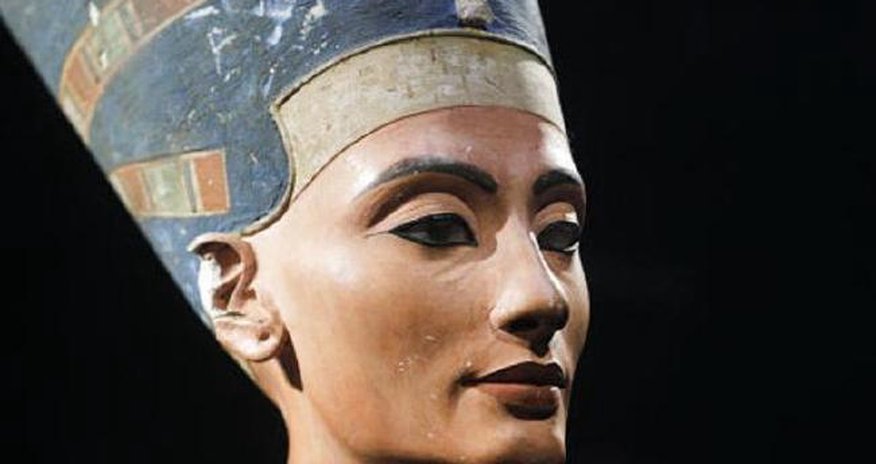
Queen Nefertiti: Hiding in plain sight?
17.03.2016 15:01


It's a mystery that has evaded the best minds in archeology for decades: the unknown fate of a beautiful queen that ruled over ancient Egypt at the height of its power.
But Nefertiti may be hiding in plain sight. At least, that's according to one recent theory that's set the Egyptology world buzzing.
The hypothesis that she was buried in a chamber just behind King Tutankhamun's tomb was put forth by British archaeologist Nicolas Reeves in August 2015.
Preliminary findings from a radar scan of the tomb site will be announced Thursday, potentially a crucial step in resolving one of ancient Egypt's biggest enigmas.
After extensive analysis of high resolution images published online last year, Reeves spotted cracks in the walls that could indicate two previously unrecognized "ghost" doorways lay behind.
The size of Tutankhamun's tomb -- "less than appropriate" for the final resting place of an Egyptian king -- added more credence to the view. Reeves' hunch is that its unusual size and layout is because it is an extension of an earlier tomb originally designed for a queen, and was repurposed upon Tutankhamun's untimely death at 17 years old.
Since September, Reeves and his team have been using state-of-the-art surveying equipment to look for a secret doorway on the northern wall that would reveal a previously unknown chamber.
Who was Nefertiti?
Historians say Nefertiti ruled Egypt alongside her husband Amenhotep IV. But after reigning for 12 years she appeared to have vanished. Some Egyptologists believe she became co-regent under a new name, while others think she may have died.
The search for her tomb has been a long and drawn out process -- due in no small part to the extra care needed to avoid damaging the historical site.
"We must find a way to protect the tomb of Tutankhamun," Egyptian Antiquities Minister Mamdouh El Damati told CNN in October. "Does that mean we will dig from above, below or from the side? We don't know."
King Tutankhamun's tomb was discovered by Howard Carter in 1922. Although Tutankhamun was a relatively minor pharoah, his tomb has been a treasure trove for experts and remains the most intact tomb ever unearthed.
Other ideas floated for who might occupy a possible chamber include Kia, said to be Tutankhamun's mother, or other family members.
But if it is Nefertiti's final resting place, experts say the finding would be monumental.
"When we find Nefertiti, I think it will be more important than the discovery of King Tutankhamun himself," said El Damati.
(СNN)
www.ann.az


Twitter
Follow us on Twitter

Similar news
Similar news

World 12:30
Iran Urges Middle East Nations to Reject US Military Support, Warns of Retaliatory Strikes











 Photo




 Video


