





Former Taliban fighters flee ISIS brutality
12.04.2016 15:30


It might just be a crackle and a hiss but to many in eastern Afghanistan, it's a sign that ISIS is back.
ISIS FM was for months how the militants reached out to local Afghans. But then the United States bombed it, as part of a broader campaign to dismantle ISIS, and the radio broadcast went silent.
Yet in the past week, according to several locals, the signal has, occasionally, returned.
"It was there three days ago, and it's gone again," one man tells CNN.
"They are asking people to pledge allegiance and march on Kabul."
ISIS first emerged last year in the country's east, gaining ground and support fast, often among disaffected Taliban or Afghan youth.
After years of war, the savagery and vision of Islam offered by the group appealed to some, though the Afghan offshoot's link to the Syria-based leadership has been questioned. Many say in fact the Afghan ISIS fighters came from Pakistan and adopted the group's branding in order to get financing.
For some, the group's brutality has proven too much.
Arabistan and Zaitoun -- two lifelong, rugged Taliban fighters whose names mean incongruously "Saudi Arabia" and "Olive" -- are a case in point.
Amidst intense infighting that has afflicted the Taliban in the past year, their faction was losing out. Then along came ISIS, which offered them superior weapons and little choice but to accept.
Their leader soon pledged allegiance to ISIS leader Abu Bakr al-Baghdadi while on a trip to Pakistan.
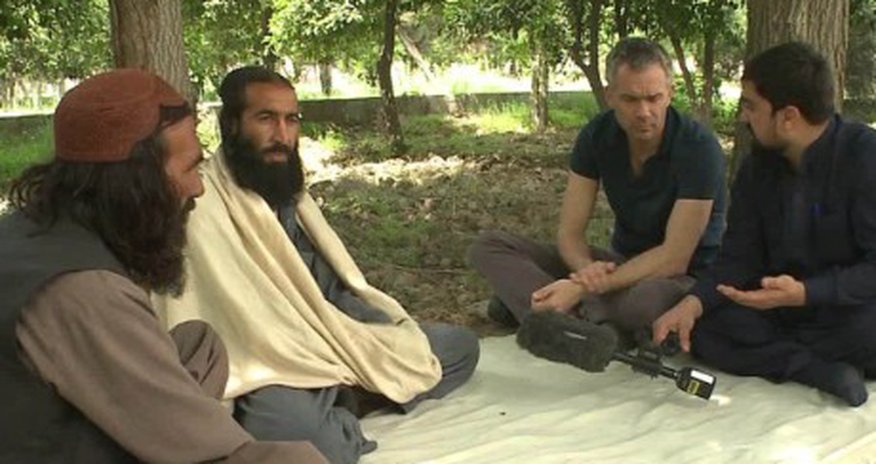
However, the two men -- who spoke to CNN near Jalalabad city in an interview arranged by the Afghan intelligence service NDS -- say they quickly realized ISIS's true agenda wasn't to help ordinary Afghans.
"They just like beheadings," says Zaitoun.
"They knew who was RICH to take their money, and the poor they would arm to fight with them, or kill them," Arabistan adds.
The new relationship went sour fast, and both men remember the moment their mistake dawned upon them.
"I remember when they beheaded seven people in the bazaar, including government workers and Pakistani Taliban," Zaitoun says.
"I saw the five-meter piece of wood they did it on, covered in blood. They just threw the bodies away, unburied. It was very un-Islamic."
For Arabistan it was more personal.
"My worst memory was learning that if you were killed fighting for them, they wouldn't hand your wife and children to your relatives, but put them in a camp."
ISIS first emerged last year in the country's east, gaining ground and support fast, often among disaffected Taliban or Afghan youth.
After years of war, the savagery and vision of Islam offered by the group appealed to some, though the Afghan offshoot's link to the Syria-based leadership has been questioned. Many say in fact the Afghan ISIS fighters came from Pakistan and adopted the group's branding in order to get financing.
For some, the group's brutality has proven too much.
Arabistan and Zaitoun -- two lifelong, rugged Taliban fighters whose names mean incongruously "Saudi Arabia" and "Olive" -- are a case in point.
Amidst intense infighting that has afflicted the Taliban in the past year, their faction was losing out. Then along came ISIS, which offered them superior weapons and little choice but to accept.
Their leader soon pledged allegiance to ISIS leader Abu Bakr al-Baghdadi while on a trip to Pakistan.
However, the two men -- who spoke to CNN near Jalalabad city in an interview arranged by the Afghan intelligence service NDS -- say they quickly realized ISIS's true agenda wasn't to help ordinary Afghans.
"They just like beheadings," says Zaitoun.
"They knew who was RICH to take their money, and the poor they would arm to fight with them, or kill them," Arabistan adds.
to take their money, and the poor they would arm to fight with them, or kill them," Arabistan adds.The new relationship went sour fast, and both men remember the moment their mistake dawned upon them.
"I remember when they beheaded seven people in the bazaar, including government workers and Pakistani Taliban," Zaitoun says.
"I saw the five-meter piece of wood they did it on, covered in blood. They just threw the bodies away, unburied. It was very un-Islamic."
For Arabistan it was more personal.
"My worst memory was learning that if you were killed fighting for them, they wouldn't hand your wife and children to your relatives, but put them in a camp."
Zaitoun and Arabistan's career paths as militants reflect the chaotic and pragmatic nature of Afghanistan's war.
Arabistan's own checkered past is clear when he holds up his cloak, grinning.
It is pockmarked with holes from what he says was an attack by an American helicopter while he was still in the Taliban. He says he only survived by hiding behind a wall.
Not far from where the two former fighters sit are many ordinary people who tried to avoid war, but still saw their lives shattered.
Many live in a huge sprawling settlement of luxury houses intended for RICH home buyers who never came. The village lies unfinished, the poor displaced by Afghanistan's latest war -- against ISIS -- living in the half-built shells.
Paghman was shot in the waist by ISIS fighters as he tried to help his wife and six children flee their village, near the town of Achin.
He barely escaped after being put in the back of a truck, and now suffers constant pain, even just sitting, and is unable to provide for his family.
"As soon as (ISIS) came to the villages, everyone including the government workers and security forces fled," Paghman says.
"ISIS fighters would kill anyone they caught and then they would burn down their houses. They burned down my house too."
Rustam's uncle was one of eight men executed by ISIS in one of their first videos from Afghanistan.
In it, the men are led along a misty hill and made to kneel on a series of explosives buried beneath them. After they deliver a brief statement to camera -- Rustam's uncle speaking first -- the bombs are detonated, the camera capturing the deaths and aftermath in sickening detail.
"My brother called our father to tell him the video was on Facebook," Rustam says.
"We couldn't bury him, as we don't have a body. The pieces of it are probably still lying where he was blown up."
(CNN)
www.ann.az


Facebook
Follow us on Facebook


Similar news
Similar news

World 12:30
Iran Urges Middle East Nations to Reject US Military Support, Warns of Retaliatory Strikes











 Photo




 Video


