





The Vocabularist: Is there anything wrong with 'iconic'?
13.04.2016 11:31


The words icon and iconic are very popular but sometimes get a bad press.
Certainly when we read phrases like "Ten icons of British travel literature," it can be difficult to know what is meant beyond something like "Ten good British travel writers".
And it might take a minute to work out what is meant by the recent claim that Brexit campaigners cited Winston Churchill and Emmeline Pankhurst "only to be shot down by the icons' relatives".
There has been mockery, too, for buildings which have "enough odd angles, or multicoloured cladding, to claim the adjective 'iconic'".
Eikon in ancient Greek meant a likeness or image, sometimes an apparition, related to a number of words meaning to seem or appear.
In the original Greek New Testament it is used several times - for instance when Jesus calls for a coin and asks whose image (eikon) is on it, then telling his hearers to render unto Caesar what is Caesar's.
When the use of religious images in the eastern Orthodox church was threatened by the iconoclasts (icon-breakers) in the early 8th Century, St John of Damascus defended them in a work against "those who decry the Holy Images" (diaballontas tas hagias eikonas).
Images (eikones) were definitely not idols (eidola) he said. (actually the word "eidolon" originally had a range of very similar meanings to those of "eikon").
In the West eikon became "icon" and has continued to be used for an image, not necessarily religious. So has "iconic" which has existed since the time of the Greek writer Plutarch (AD46-120) but was not common until recently.
Particularly, the words have come to denote a symbol - a little picture on a computer display, for instance, or something much grander, as when the Taj Mahal is seen as an "iconic" depiction of India.
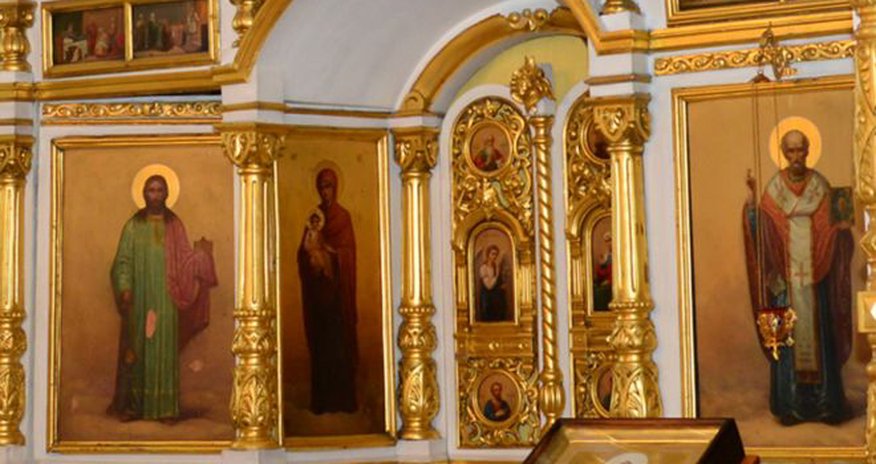
The use of icon specifically for a religious image in the Orthodox church hardly appears in English until the 19th Century. In 1833 the Rev Robert Pinkerton wrote of "six sacred ikons" carried in the Palm Sunday procession in Moscow.
Uses such as "gay icon" must surely be influenced by the idea of religious veneration . To be a gay icon like Judy Garland you do not necessarily have to be gay yourself, any more than a saint on a Russian icon has to be Russian - you only have to be admired.
Meanwhile Winston Churchill could be said to be an "icon" of British defiance, and Mrs Pankhurst of women's heroism.
But some people may just call someone an icon, or a block of flats "iconic", because they want to say something nice about them.
(BBC)
www.ann.az


Facebook
Follow us on Facebook


Similar news
Similar news

World 12:30
Iran Urges Middle East Nations to Reject US Military Support, Warns of Retaliatory Strikes











 Photo




 Video


