





Iraqi families sell organs to overcome poverty
20.04.2016 11:01


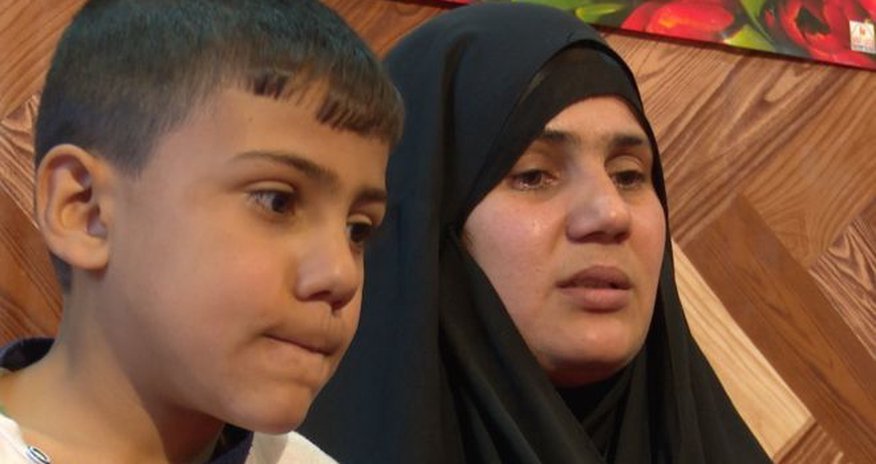
Om Hussein is a mother close to breaking point. Along with her husband and their four young children, she is struggling with poverty like millions of other Iraqis.
Her husband, Ali, is unemployed. He is diabetic and has heart problems. She has been the breadwinner for the past nine years, eking out a living as a housemaid. But she is now exhausted, and can no longer work.
"I am tired and we cannot make any money to pay for the rent, medicine, children's needs and food," Ms Hussein said at the family's temporary one bedroom home in eastern Baghdad.
Their dilapidated house collapsed a few months ago, and they have survived thanks to the help of friends and relatives.
Her husband added: "I worked at everything you could think of. As a butcher, a day labourer, a rubbish collector. I would not ask for money, but they would give it to us. I would not ask for food.
"I would tell my son to collect waste bread from the street and we would eat it, but I never asked for food or money."
Facing such poverty, Ms Hussein was driven to make a huge sacrifice.
"I decided to sell my kidney," she said. "I could no longer provide for my family. It was better than selling my body or living on charity."
The couple approached an illegal trader to sell their kidneys, but initial tests proved their organs were not healthy enough for transplant.
Disappointment followed, and the couple considered taking a desperate solution.
"Because of our miserable conditions we even thought of selling our son's kidney," Ali said, angrily, while pointing at his nine-year-old son, Hussein.
"We would do anything but beg. Why on earth were we in this position?"
The family did not go that far, but they said just the thought of it left them heartbroken.
The organ trade
Grinding poverty has made the trafficking of kidneys and other organs a phenomenon in Baghdad.
About 22.5% of Iraq's population of nearly 30 million people live in abject poverty, according to World Bank statistics from 2014.
Gangs, offering up to $10,000 (£7,000) for a kidney, have increasingly targeted the country's poor, making it a new hub for the organ trade across the Middle East.
"The phenomenon is so widespread that authorities are not capable of fighting it," said Firas al-Bayati, a human rights lawyer.
"I have personally dealt over the past three months with 12 people who were arrested for selling their kidneys. And poverty was the reason behind their acts," he said.
"Picture this scenario: an unemployed father who does not have any source of income to cater for his children. He sacrifices himself. I consider him a victim and I have to defend him."
In 2012, the government approved a new law in an attempt to combat the trafficking of humans and organs.
Only relatives are allowed to donate their organs to one another and by mutual consent. Traffickers then usually forge the identity documents of both the buyer and the seller to prove they are related.
Penalties vary from three years in prison to the death sentence and judges, al-Bayaty says, do not consider poverty as justification for the deals.
"It is very easy to forge identity papers. But the government will soon introduce new biometric identity cards, which are impossible to counterfeit," he said.
Business gone wrong
We were granted rare access to an Iraqi prison to meet a man who was caught offering kidneys for sale.
After going through multiple security checkpoints, we met Mohammed - he would not give us his full name.
He is serving time in a maximum security facility, along with 10 others convicted of organ trafficking.
"In the very beginning I did not feel guilty," said Mohammed, a father of two.
"I used to look at it as a humanitarian cause, but after a few months in this trade I started questioning the morality - mostly because of the miserable conditions of the organ sellers. It broke my heart seeing young people doing this for money."
He was arrested in front of a government hospital in Baghdad in November 2015 after a police officer posed as a potential buyer.
The majority of the illegal organ transplants take place in private hospitals, especially in Iraqi Kurdistan, according to Mohammed, where he says restrictions are more relaxed than in Baghdad.
But such operations can still take place in state-run hospitals as surgeons admit it is very hard to scrutinise the documents of each case.
"There is no law in the world that holds the surgeon accountable for this," said Rafed al-Akili, a surgeon at the Kidney Diseases and Transplantation Centre in Baghdad.
"It is true that, in some cases, we have doubts, but this is not enough to stop the surgery because without it people will die."
But nothing of this seems to be of any comfort to the Husseins.
(BBC)
www.ann.az


Telegram
Follow us on Telegram


Similar news
Similar news

World 12:30
Iran Urges Middle East Nations to Reject US Military Support, Warns of Retaliatory Strikes











 Photo




 Video


