





South Sudanese want peace - and ice cream
28.04.2016 13:01


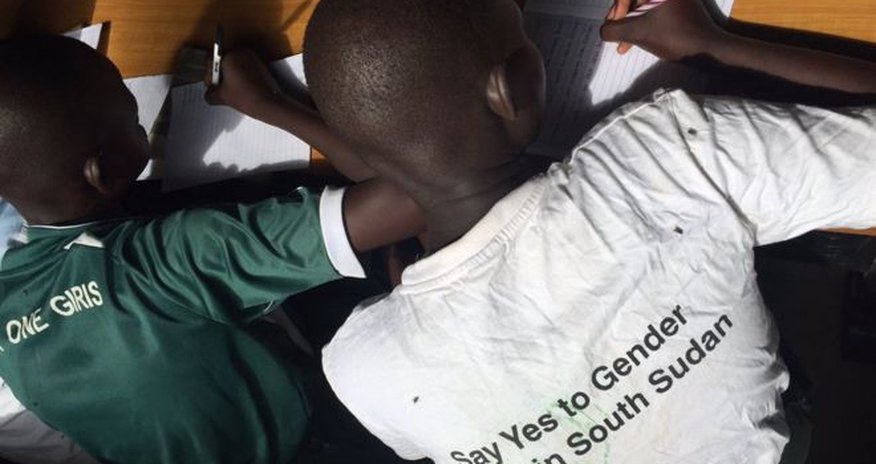
Stop the war, stop tribalism - and we need more chocolate and ice cream. That's what the girls of the Juba One primary school want for this new era in South Sudan.
The return to Juba of rebel leader Riek Machar is allowing many South Sudanese to dream of a better future, whether it's plentiful sweet treats, or a more stable, more prosperous country.
But, inevitably given the bitter nature of South Sudan's civil war and the legacy of past conflicts, the risk of future problems remains high.
First, the good news.
Now Mr Machar has been sworn in as first vice-president, a transitional government of national unity can be formed.
The government is meant to oversee a transitional period leading up to elections in 30 months time - a possible future source of tension given Mr Machar's seeming determination to become president and President Salva Kiir's apparent refusal to countenance this.
The rival military forces will need to be integrated into one body.
This won't be easy if the body language of the government and rebel troops at the airport when Mr Machar arrived is anything to go by. They stood stiffly a couple of metres apart, refusing to acknowledge their former adversaries.
The new government is also meant to set up a hybrid court, to try those accused of the worst atrocities, as well as a national healing and reconciliation programme.
None of this will be straightforward.
Deja-vu
Mr Machar's return was delayed because of days of disagreements, another reminder of mistrust. There was also no obvious warmth when Mr Machar and Mr Kiir greeted each other during the latter's investiture.
The main protagonists have been here before.
Mr Machar led a breakaway group in 1991 during the liberation struggle against the Sudanese government.
Afterwards he came back into the fold, serving as Mr Kiir's vice-president.
It wasn't smooth. As one minister at the time explained to me, Mr Kiir and Mr Machar essentially ran separate systems within government.
It was this tension, in part, that exploded in 2013, first when Mr Kiir sacked his deputy, and then when the war broke out a few months later.
Studied at UK's University of Bradford, obtaining a PhD in philosophy and strategic planning in 1984
Married UK aid worker Emma McCune in 1991; she died while pregnant
Switched sides on several occasions during the north-south conflict as he sought to strengthen his position and that of his Nuer ethnic group
Sacked as South Sudan's vice-president in July 2013
Denied he was plotting a coup in December 2013 - but his fallout with President Kiir led to more than two-years of conflict
Sworn in again as vice-president in April 2016 as part of an internationally brokered peace deal
(BBC)
www.ann.az


Youtube
Follow us on Youtube


Similar news
Similar news

World 12:30
Iran Urges Middle East Nations to Reject US Military Support, Warns of Retaliatory Strikes











 Photo




 Video


