





Why the battle for Aleppo could decide the Syria war
06.05.2016 15:00


If Wednesday's ceasefire in Aleppo holds, it could be a real turning point in what has become the world's worst -- and perhaps most geopolitically complex -- conflict in recent memory.
After four years of fighting, however -- particularly heavy for the last two weeks -- it’s unclear whether the truce will stick. The tactical situation in the city remains largely murky. For government forces, rebels and their international backers alike, what happens in Aleppo is seen as setting the tone for the rest of the country.
The question now is whether the ceasefire pushes them towards a negotiated settlement that could ultimately begin to restore Syria's stability -- or simply represents a lull before yet more battles.
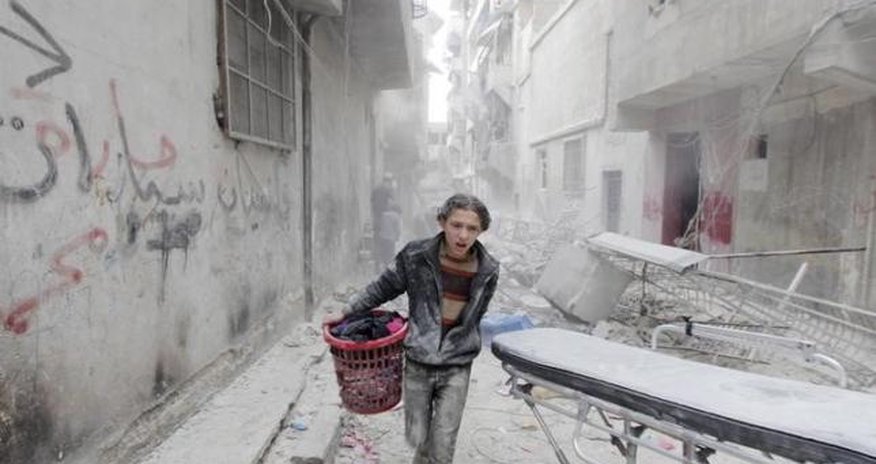
The latter option would be more bad news for the city's beleaguered residents, who have faced ever worsening conditions since the battle over Syria’s second city began on July 19, 2012. Public services within the city, particularly hospitals, have been repeatedly targeted and, according to aid workers, have now more or less completely collapsed. Of the original population of 2.1 MILLION , it is far from clear how many now remain. If there is a truce, it is possible much of the remaining population might use the opportunity to flee -- at least if they believe it will not last.
Western officials and analysts say it is extremely difficult to ascertain exactly what the plan is for Syrian President Bashar al-Assad and his Russian allies -- and particularly whether they are playing to the same game plan.
Regaining control of the city outright would be a major win for the Assad government. It remains relatively secure in the capital Damascus, while the city of Homs -- along with Aleppo one of the cradles of the original 2011 uprising -- was regained from rebel forces in May 2014. Should they be able to take Aleppo, the city of Deraa remains the only truly significant population center in relatively moderate rebel hands.
Taking back Aleppo, therefore, would deliver a perhaps fatal blow to those -- including many elements of the United States government -- who want Assad gone. It might leave the door open for the next U.S. president -- whether Hillary Clinton or Donald Trump -- to do a reluctant deal and perhaps build a de facto alliance to target Islamic State.
As always in Syria, however, the reality may be rather more messy. Some experts doubt that Assad's government has sufficient forces -- even with Iranian-backed support that includes Hezbollah fighters and Afghan mercenaries -- to take or, more importantly, hold down the city and still have the energy to fight in the rest of the country.
Not all of Aleppo’s rebel fighters are the moderates many in Washington see as the best hope for a post-Assad Syria. Islamist group al-Nusra, an enemy of Islamic State but still generally considered an al Qaeda affiliate, is also highly active. It was blamed for a bomb attack on a hospital over the weekend, a development which, if confirmed, could complicate the situation even further.
For Washington and the West, the priority remains the fight against Islamic State. Aleppo, in that sense, is little but a sideline -- although the group does hold some ground not far outside the city and some believe may benefit from the current fighting.
Much depends on what Russian leader Vladimir Putin wants to achieve. The Russian military intervention in Syria has been in every sense a game changer. In the battle for Aleppo, however, Assad’s forces appear to be relying less on Russian military hardware. Western experts believe Moscow’s ability to scale military support up and down gives Putin considerable influence over Assad's actions. At the end of the day, however, they are still both independent actors with distinctly different interests.
Moscow has now positioned itself as Washington’s primary arbiter in Syria. The hope is that Putin, perhaps worried about being dragged further into the kind of quagmire the West has faced in Iraq and Afghanistan, will deliver a deal. Europe in particular is desperate for a fix in Syria that might slow the flow of refugees.
That, of course, makes the situation in Syria part of a much wider chessboard. Some Western officials believe Putin's entire Syria strategy is focused on destabilizing Europe. Others are much more doubtful.
In Aleppo, much will depend on how those on the ground perceive any truce. If they believe it is only temporary and use the brief lull in fighting to flee the city, that could open the door to a final battle. Alternatively, it's possible the Assad regime might already be opening the door to local deals, offering a path to some kind of arrangement and understanding without the need for more bloodshed.
That could even mean finding a way for those to have taken up arms against the regime to cut a long-term deal with the government, unlikely although that might seem for now.
Either would be an approach Moscow knows well. In Chechnya, Russian government forces smashed the city for several years to root out separatist rebels. In time, however, they were able to reassert control, using a carrot and stick approach of economic development, bribes and other incentives coupled with an ongoing crackdown against those who still resisted.
Sri Lanka's government took a similar approach with Tamil Tiger rebels in 2009. In both cases, aid and human rights groups complained that hospitals and other civilian aid facilities were deliberately targeted in the final stages, in part to persuade local populations to flee to areas under government control before the closing battle.
The coming weeks will provide a clue as to whether Damascus and Moscow are working to a similar strategy in Aleppo.
As for the United States and its allies, they seem for now to be adopting the same strategy that they took with both Chechnya and Sri Lanka -- watching and protesting from the sidelines, unwilling to take any real action. Either U.S. or Gulf forces could, of course, take decisive action to support the Aleppo rebels, either through weapons drops, reinforcements or air strikes on government positions.
That doesn't look likely to happen -- and even if it did, it might only prolong the horror and fighting for the population.
The battle of Aleppo may not be over yet.
(reuters.com)
www.ann.az


Youtube
Follow us on Youtube


Similar news
Similar news

World 12:30
Iran Urges Middle East Nations to Reject US Military Support, Warns of Retaliatory Strikes











 Photo




 Video


