





Brazil's Olympic chaos
29.05.2020 08:42


If Olympic opening ceremonies should capture the atmosphere in a host nation, then Rio 2016's curtain-raiser should be interesting.
With 100 days until the Games begin, Brazil is unraveling fast -- largely overshadowing the impending arrival of sport's greatest showpiece.
Who needs the staple pre-Olympic media diet of venue delays and security fears when you have a leader facing impeachment, a gigantic corruption scandal and a global public health emergency?
As the clock ticks, it is impossible to know who will occupy the seat reserved for the Brazilian president at the August 5 opening ceremony.
The incumbent, Dilma Rousseff, is alleged to have manipulated her government's economic figures prior to 2014's election. She says the consequent impeachment proceedings against her are a "coup" she will fight to the last.
Leading her opponents is Eduardo Cunha, speaker of Brazil's lower house. He says Rousseff has brought "economic chaos" on Brazil, but is facing his own series of proceedings related to corruption and money-laundering allegations.
Hundreds of thousands of protesters on both sides routinely take to Brazil's streets. Forgive them if they haven't yet bought badminton tickets.
"If it was a normal situation, the excitement would be starting to grow somewhere around May or June," says Regys Silva, one of the few Brazilians for whom the Olympics remain a daily priority.
A lawyer in the northeastern city of Fortaleza, he and a group of friends run a daily Portuguese-language Olympics website named Surto Olimpico.
"But it's Brazil," he continues. "The country always has a crisis. And now the Olympics have to compete with this crisis."
Crises
Crisis, singular, may understate matters.
Behind the presidential drama simmers a countrywide corruption scandal featuring partly state-owned oil giant Petrobras.
Since late last year, investigators have explored ties between that scandal and Olympic infrastructure projects.
Meanwhile, Brazil is in its worst recession since the 1930s by some measures. Government data released at the start of April showed industrial output down by 9% year-on-year. The World Bank says the shrinking of Brazil's economy by 3.8% last year represents its worst performance since 1981.
On the undercard, traditional Olympic host-nation worries persist. Will the venues be ready? Will everything work?
An extension of Rio de Janeiro's Metro Linha 4, a subway line intended to connect the largest of four Olympic venue clusters with the rest of the host city, remains incomplete. Officials say it will open in July -- travel on the extension during the Games may be restricted to accredited personnel and ticket-holders prepared to pay.
Completion of the subway link has long been in mild jeopardy. Should it fail to materialize, travel during the Olympics may become daunting. In a cost-cutting drive, organizers slashed the number of Games-time transportation vehicles from 5,000 to 4,000 (losing 20,000 of the initial 70,000 volunteers in the process -- fewer ways to get there, fewer people to give you directions).
An International Olympic Committee (IOC) team says the venues are "98% complete" but test events in gymnastics and swimming have been hit by power outages and a number of other minor gripes.
The issue of water quality in Rio's Guanabara Bay, home to sailing events and polluted by raw sewage, has been without a clear solution -- so to speak -- for so long that athletes accept they must come armed with precautions against illness.
"What we see now is that 60% of the surface is clean," IOC president Thomas Bach said last week, trying to look at the bay and find a bright side. "Without the Games it would be zero."
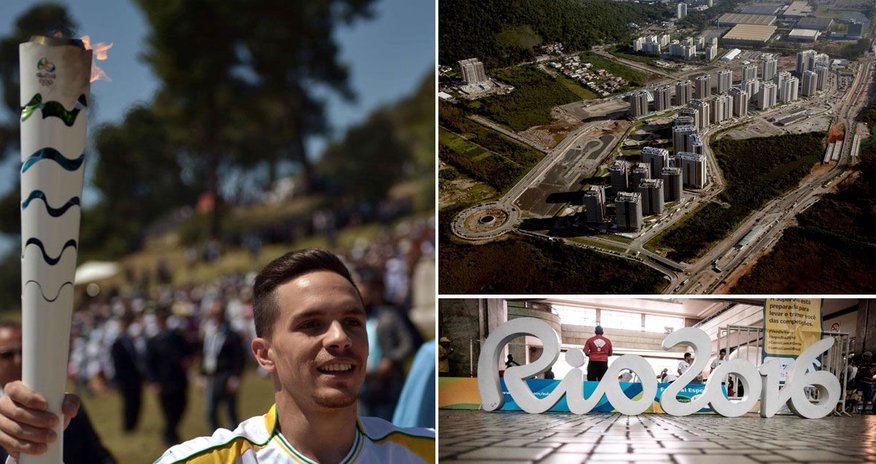
More seriously still, a newly-built elevated bike path, one of the mayor's projects aimed transforming the city ahead of the Games, partly collapsed last week, killing two people -- on the same day as performers lit the Olympic torch in Greece.
Security, arguably the pre-Games headline at the past two Olympics in Sochi and London, remains a concern -- as it was ahead of Brazil's staging of soccer's 2014 World Cup -- but it is one among many.
Organizers say 85,000 soldiers and police will be on duty during the Rio Games, as compared to 17,000 military personnel in a security staff of around 40,000 at London 2012. However, there have been wider cuts to Brazilian security budgets over the past year.
(CNN)
www.ann.az


Youtube
Follow us on Youtube


Similar news
Similar news

World 12:30
Iran Urges Middle East Nations to Reject US Military Support, Warns of Retaliatory Strikes











 Photo




 Video


