





The women that kill, abuse and torture
02.06.2016 18:01


We have struggled to comprehend the origins of female violence, painting female serial killers as reluctant sidekicks or psychotic femmes fatales. That needs to change.
It’s the visit that we all hope we’ll never experience. The police arrive at your home to tell you that a family member has been murdered. For Marian Partington, 20 years of not knowing what happened to her sister Lucy ended with one such visit on a Saturday morning in March 1994.
Lucy disappeared in December 1973 while waiting for a bus in Cheltenham. She was 21 years old and in her final year of an English degree at the University of Exeter. It was two decades before Lucy was found and the grim truth about her death could emerge. She had been tortured, murdered, dismembered and buried in the cellar of 25 Cromwell Street, Gloucester, along with other victims of the serial killers Fred and Rosemary West.
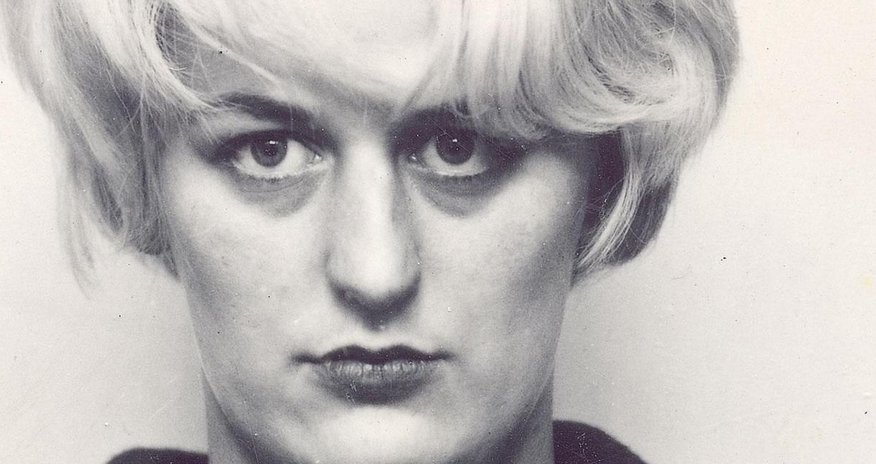
Fred West took his own life in prison on New Year’s Day 1995. In the November of the same year, Rosemary was convicted of ten murders, including that of her 16-year-old daughter, her eight-year-old stepdaughter and her husband’s pregnant lover. She was sentenced to life in prison without parole.
"Lucy’s death was about sexual exploitation and cruelty,” Marian says. "Her death was tortured and tortuous. But I couldn’t talk about it without facing the horror of what had happened to her. One huge thing was her not having a voice. Lucy was gagged… I felt if I didn’t speak about what had happened, I might as well be dead too.”
Marian works with a secular organisation called the Forgiveness Project and tells her story to male and female prisoners as part of restorative justice work. In 2004 she wrote to Rosemary West – who has become a hated figure in the UK – a letter full of compassion and empathy. West responded by asking her not to be in contact again.
Coming to terms with the crime has not been easy. Marian recalls West’s committal. "I don’t use the word corrupt lightly, but I remember sitting and listening to what she had done… and I could feel myself being corrupted.” Work with female offenders, she says, is particularly challenging.
Women are far less likely than men to commit crimes, but rates of female violence reported in the UK have increased. The number of girls and women arrested for violence has more than doubled between 1999/2000 and 2007/08. Whether this reflects an increase in violence per se or in its visibility – or both – is much debated.
The idea of a woman being violent, even murderous, is shocking. But why? Is violence at the hands of women somehow different to that at the hands of men? Regardless, we don’t treat male and female violence the same. Female offenders are often cruelly stereotyped by the media, and they – and their victims – can be poorly served by the criminal justice system.
Female violence is not easy to confront, but a growing number of people are exploring the idea that to rehabilitate women offenders and support their victims better we must move towards a more progressive understanding of what makes a woman harm or kill.
A history of violence
In the past, female power and violence was recognised and even celebrated. Female warriors such as Joan of Arc, Boudicca and the Amazon fighters are iconic. More recently, women in Western and non-Western societies have often taken on leading roles in the military. Women have proved that they are capable of deploying violence in ways that seem to demonstrate choice and agency – sometimes in heinous ways. For example, the Nazis trained half a million women for military service, some 3,500 of whom served as concentration camp guards. A small number stood trial for war crimes.
It was 1997 when I first visited Rwanda, three years after the genocide there. I was struck then, interviewing survivors and perpetrators, and later, when translating testimonies for a charity for survivors, by how many women had been involved. They had taken part as bystanders, instigators and even key figures in the genocide – just as they had in the Holocaust.
The sense of betrayal when women were involved seemed deeper, somehow, because women ‘shouldn’t’ commit such crimes. One chilling testimony, that haunted me because it implied such intimate knowledge of childhood, reported that women would strew chilli pepper around houses, knowing it would cause any hiding children to sneeze and allow them to be found and hauled out to their death.
Since the 1970s there has been a focus on male violence against girls and women. In many ways that has shifted the framework for characterising violence – particularly intimate and domestic violence – to one that is largely gender-related. This is not surprising – the ‘gender gap’ in recorded crime is well-known. Men commit crime at higher rates than women, are involved more in serious and violent offences (they are responsible for 80 per cent of violent acts), and are more likely to reoffend. They are also more likely to murder their partners, to be convicted of domestic violence and to commit physical stalking and sexual offences.
None of this means, however, that female offenders do not exist – and how they are treated has become a major part of criminological research. "Some American criminologists had argued that so-called ‘women’s lib’ would lead to a wave of aggressive crime,” says Frances Heidensohn, a criminologist and visiting professor at the London School of Economics. "Women’s share of crime has increased a bit, but we haven’t seen a big rise… We are talking about a modest contribution to crime and an overreaction to it, with a sensational treatment of perpetrators.”
The number of women in prison in England and Wales nearly trebled between 1993 and 2005. Although that number is now declining, there are still over 2,000 more women behind bars today than in the 1990s, and women make up around 5 per cent of the prison population. At end of March 2016, more than a quarter of the women sentenced in English or Welsh prisons were there for violence against the person.
Typically, women commit violence against people they know, often the vulnerable or those dependent on their care – children, disabled people, the elderly. Their crimes happen more in private and intimate ‘caring’ settings than in public.
Women are involved, either as bystanders or leaders, in crimes including ‘honour’-based violence, terrorism and human trafficking. In one recent case, a woman narrowly escaped being murdered by a man who wanted to marry her. Disturbingly, a very close female family member of the woman admitted that she and her husband had known of the planned attack and had waited by the phone to hear whether it had been successful.
This is not unusual. A recent report on ‘honour’-based violence, female genital mutilation and forced marriage by Her Majesty’s Inspectorate of Constabulary concluded that both men and women are perpetrators. "Female family members can be involved in facilitating violence and abuse through informal conversation, pressurising males of the family to undertake [honour-based violence] acts or assisting in arranging violence, or actually being involved in the violence or killings,” the report stated. Recent reports have also highlighted the often neglected role women may play in terrorist activities and human trafficking.
In May 1993, nurse Beverley Allitt, known in the media as the ‘Angel of Death’, was sentenced after being found guilty of murdering four children and harming several others. On 5 May, the Daily Express, a UK daily newspaper opined: "Women should nurture, not harm. By and large they do. Even today, violence is a male speciality. But nurses are supposed to be the epitome of female care. They are the angels of newspaper headlines. When women do things like this, it seems unnatural, evil, a perversion of their own biology.”
The paper was summing up what is known as the biological essentialism argument – that women, by nature, are ‘hard-wired’ to care for and nurture, rather than to hurt and kill. Men do, of course, commit more violence than women. But are our brains and bodies, through genes and chemicals, responsible for the crime gender gap? Are women who commit violent crimes therefore doubly deviant and, somehow, not really women?
The idea of there being a typical ‘male’ and ‘female’ brain or character is not backed up by current research.
In one paper, Gina Rippon of Aston University and colleagues highlight ‘non-trivial overlap’ between men and women on traits that are commonly considered either masculine or feminine, such as physical aggression, tender-mindedness and mental rotation. Recent papers by others have characterised the extent of the overlap between men and women. In fact, Rippon says, splitting the people they are studying into ‘male’ and ‘female’ is "actually impeding progress” in gaining any insights into how brain and behaviour relate.
But while male violence is sometimes valorised – in war, for example – or tolerated – as in a pub brawl – it’s rarely the same for women’s violence. We either pity the women who commit heinous crimes or try hard to distance ourselves from them. Rather than identify with them, it is easier to class each woman who abuses or kills as exceptional instead. Particular cases are elevated to mythical status, and those who perpetrate them are pitied or vilified, rather than understood. The image created by female offenders can be more powerful, because it is seen as transgressive of gender. It leaves a longer-lasting impression.
Another way to deny female violence is to argue that women act only under the influence of evil men. All too often, women offenders are characterised as ‘mad’ (and so to be pitied, rather than blamed), ‘bad’ (set aside from women as a whole) or ‘sad’ (forced into violence by pressure of circumstance, in retaliation or by coercion).
Typically, a woman who is violent will have her sexuality portrayed as deviant, and her sexual attractiveness – or lack of – examined. Her role as a woman will also be scrutinised – is she a bad wife, or a bad mother? We need to keep the very essence of womanhood separate from, and untainted by, women who kill.
Intimate terrorism
Home is meant to be where we feel safe, somewhere we’re looked after and nurtured, so violence that occurs there, or in other places where people are cared for, seems the most shocking. The traditional focus on male violence in intimate relationships is understandable, as men are more often the perpetrators, and women are more likely to suffer serious injury or die. However, men are not always the offenders, and women not always the victims.
According to the Crime Survey for England and Wales, in 2014/15, 27 per cent of women and 13 per cent of men had experienced any type of domestic abuse since the age of 16, equivalent to an estimated 4.5 million female victims and 2.2 million male victims. Same-sex relationships are no less violent than heterosexual ones. A 2013 study by the US Centers for Disease Control and Prevention found that 44 per cent of lesbians had been physically assaulted by a partner, compared to 35 per cent of straight women. Bisexual women were even more likely to be targeted.
The much-cherished role of mother, key to the identity of so many women, can’t be ignored, especially when it becomes distorted – for example in cases of sexual abuse. Dr Anna Motz, a clinical and forensic psychologist and psychotherapist, explains how difficult it is to scrutinise that role: "We can now talk about women as sexual beings. That has been possible since the rise of feminism,” she says, "but, related to that, women can be deviant and misuse their role as care giver and mother, and it has slowly become more possible to think about it, allow it to be seen.”
Estimates by charities working with perpetrators and victims of child abuse vary, but according to ChildLine, a UK charity for children, 17 per cent of its calls from children reporting sexual abuse are about women. The Lucy Faithfull Foundation, which works to safeguard children and young people from sexual abuse, estimates that women are responsible for somewhere between 10 and 20% of all sexual offences against children. But, according to official statistics, 1% of all child sex offences are committed by women. This discrepancy is likely in part because children who say they have been abused by a woman are not always believed.
In the UK, in 2014/15 (as in other years), the age group with the highest rate of homicide was children under one – they accounted for 5 per cent of homicide victims but only 1 per cent of the population. The majority of children that are murdered are killed by a parent or step-parent. While mothers are responsible for a large proportion of the murders of very young infants – mothers are more likely than fathers to kill their child soon after birth – fathers are more likely to kill in later childhood.
Mothers are also thought to be responsible for almost all cases of (albeit rare) Munchausen’s syndrome by proxy, also known as fabricated or induced illness.
Mother, stands for comfort?
Estela Welldon has explored the relationship between mothers and children. This relationship can, at its worst, turn ‘perverse’ and damage children, sometimes irretrievably. Women’s violence, she writes, is directed towards their own bodies or their creations – their children.
"My discovery was about the internal circular motion of perversion. When it happens again and again it gives you a new theoretical framework,” she says. Welldon’s book Mother, Madonna, Whore was banned in one iconic feminist bookstore in north London. Even now, some feminists see her as a traitor to the cause. "I broke new ground and some people do not forgive you for that,” Welldon says, but she stood firm, knowing that her findings came straight out of clinical observations that she felt she could not ignore.
"I began to think and listen: ‘What are they talking about? They hate their child…’ It is important to think, and not to judge.” Welldon’s work has changed clinical practice, and her work at the Portman Clinic in London led the way in treating violent women using intensive psychoanalysis and group therapy.
Psychologist and psychotherapist Anna Motz says that the idealisation of motherhood and the denial of the capacity for female violence can prove a risky mix, particularly for mothers who were damaged themselves at some point. "Women are forced into caring roles,” says Motz, "but can become envious of those for whom they care – vulnerable creatures.” When they have been abused or neglected themselves, she argues, they can re-enact violence on that vulnerable creature, or another who takes that place in their imagination: "a sadistic revenge crime against their own abuser” – in their own minds, at least.
(BBC)
www.ann.az


Facebook
Follow us on Facebook


Similar news
Similar news

World 12:30
Iran Urges Middle East Nations to Reject US Military Support, Warns of Retaliatory Strikes











 Photo




 Video


