





Ireland’s abortion laws violated woman's human rights, says UN
09.06.2016 22:34


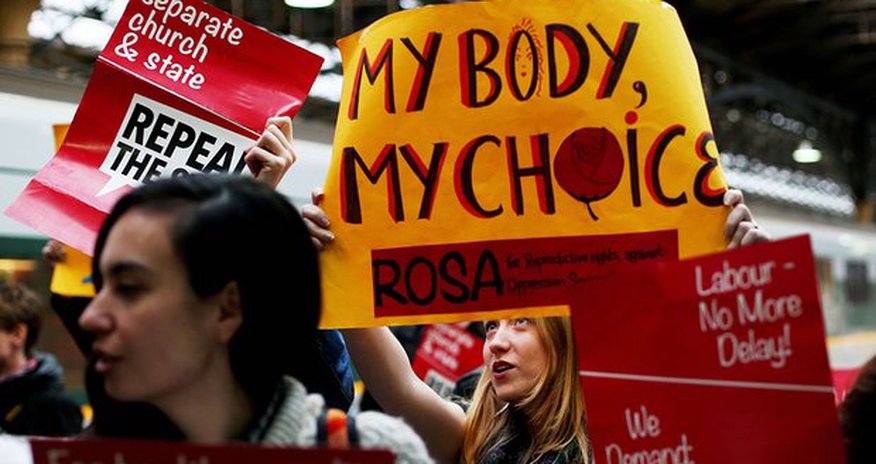
The UN’s human rights committee has ruled that Ireland’s restrictive abortion legislation subjected a woman to cruel, inhuman and degrading treatment and violated her human rights, in a ground-breaking judgment that is expected to set an international precedent.
The landmark ruling calls on Ireland to reform its law on abortion to introduce "accessible procedures for pregnancy termination” to prevent similar violations in the future. The judgment marks the first time thatan international human rights committee has responded to an individual complaint by recognising that by criminalising abortion, a state has violated a woman’s human rights.
A panel of UN human rights committee experts found that Ireland’s prohibition and criminalisation of abortion services subjected Amanda Mellet to severe emotional and mental pain and suffering in 2011, when she was told she could not have an abortion in Ireland, even though doctors had discovered that the foetus had congenital defects that meant it would die in the womb or shortly after birth.
Ruling on Mellet’s complaint, the committee concluded that Ireland’s abortion laws, which are among the most restrictive in the world, meant that she had to chose "between continuing her non-viable pregnancy or travelling to another country while carrying a dying foetus, at personal expense, and separated from the support of her family, and to return while not fully recovered”. This violated her right to freedom from cruel, inhuman and degrading treatment.
Ireland has signed the international covenant on civil and political rights (ICCPR), which is part of the international bill of human rights. As such, it is obliged to compensate Mellet and to prevent similar violations from occurring in the future.
Ireland "should amend its law on voluntary termination of pregnancy, including if necessary its constitution, to ensure compliance with the covenant, including effective, timely and accessible procedures for pregnancy termination in Ireland”, the ruling stated.
Prohibited from accessing a termination in Ireland, Mellet chose to travel to the UK and returned 12 hours after the procedure because she could not afford to stay longer. The ashes of the foetus’s remains were unexpectedly delivered three weeks later by courier.
"Many of the negative experiences she went through could have been avoided if [she] had not been prohibited from terminating her pregnancy in the familiar environment of her own country and under the case of health professionals whom she knew and trusted,” the committee wrote in its findings.
As well as confronting the shame and stigma associated with the criminalisation of abortion, Mellet’s suffering was worsened by the difficulties she faced in getting information about how to access an abortion, the committee said. Ireland’s Abortion Information Act allows healthcare providers to give patients information about the circumstances when abortion services can be available in Ireland or abroad, but the law prohibits them from saying anything that could be interpreted as promoting abortion.
The ruling said Ireland needed to take measures to ensure that healthcare providers are able to supply full information on safe abortion services "without fearing being subjected to criminal sanctions”, the committee said.
Abortion is permitted in Ireland only when there is a risk to the life of a pregnant woman; in every other circumstance it is a serious crime. Since 1983, the Irish constitution has placed the "right to life of the unborn” on an equal footing with the right to life of the pregnant woman.
Leah Hoctor, regional director for Europe at the Center for Reproductive Rights, said: "When a woman is denied the right to make decisions about her pregnancy, her health and wellbeing are jeopardised. In recognising that by outlawing abortion Ireland violated the human rights of Amanda Mellet and caused her intense anguish and distress, the committee has issued a landmark ruling confirming that Ireland’s abortion laws are cruel and inhumane, and violate women’s human rights.
"The Irish government must now comply with this ruling, redress the harm Ms Mellet suffered and reform its laws to ensure other women do not continue to face similar violations.”
Colm O’Gorman, the executive director of Amnesty International Ireland, said: "The Irish government must act promptly. Ireland’s constitution is no excuse – it must be changed to allow the reforms required by this ruling.”
www.ann.az


Youtube
Follow us on Youtube


Similar news
Similar news

World 12:30
Iran Urges Middle East Nations to Reject US Military Support, Warns of Retaliatory Strikes











 Photo




 Video


