





Why North Korea is a safe haven for birds
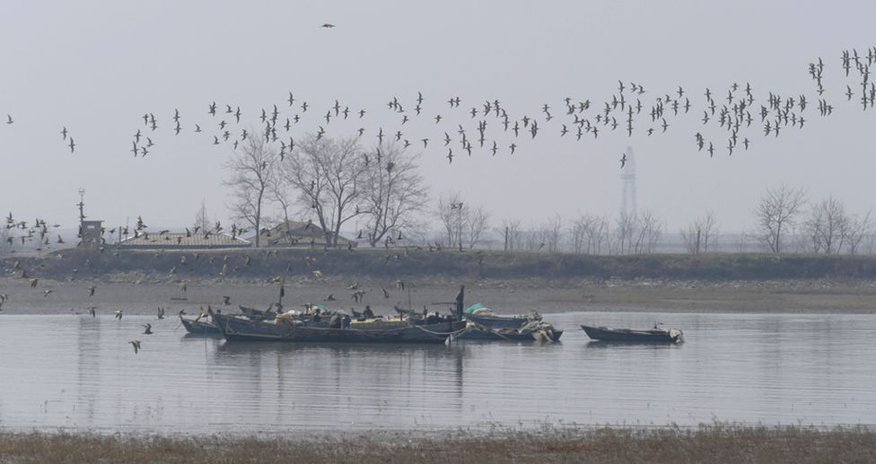
20.06.2016 16:00


Photos from inside North Korea reveal how the ecology of the secretive Asian country is preventing the extinction of several once plentiful species of migratory birds.
Despite being closed to most foreigner visitors, North Korea may ironically be the saviour of one of the world's greatest international migration routes - the avian East Asian Australasian Flyway.
Fifty million birds, from cranes to song birds, journey along the Flyway twice a year. Eight million of those are shorebirds - or waders.
And for many thousands of those, North Korea's west coast - on the Yellow Sea - is their sole stop-off point.
In tidal mudflats, species such as the bar-tailed godwit - the larger birds in the photo above - refuel on worms and molluscs.
And the endangered great knots - spotted below - search for small clams.
These photos were taken by a group of New Zealand birders with permission from North Korea's security-conscious government.
With their binoculars, powerful telescopes and cameras, they counted the birds as they stopped off on their epic journeys from the southern hemisphere to the top of the northern hemisphere.
The Kiwi birders belong to a conservation NGO in New Zealand - the Pukorokoro Miranda Naturalists' Trust.
"As we lose habitat elsewhere, the birds are going to get more and more pushed into remaining habitat, which by default means North Korea," says the group's David Melville - pictured below on the left.
North Korea's coast is considered so important because the shorelines of neighbouring nations - China and South Korea - have witnessed rapid and large-scale reclamation projects.
Mudflats have been converted to dry land for agriculture and industrial development.
Of the total area of Yellow Sea mudflat habitat which existed 50 years ago, only one third remains - according to shorebird ecology expert Richard Fuller of the University of Queensland, Australia.
He also says that the Flyway's largest shorebird, the Far Eastern curlew - spotted below - has declined in number by more than 80% in 50 years.The Kiwi birders spent 10 days in Mundok county, on North Korea's west coast.
They visited not only tidal mudflats where the birds feed - but also salt works and rice paddies, where the creatures rest and roost.
"The security forces needed to be informed that foreigners were coming to look at birds," says Melville.
"But we were able to show local people shorebirds through our telescopes. We even found birds which had flown from New Zealand which I had personally banded."
North Korea's lack of development - compared to China and South Korea - means the country's mudflats are largely intact.
But the conservationists say the birds also benefit from there being fewer river-polluting factories, and lower levels of agricultural fertilisers and pesticides running off the land into the marine environment.
The expansive mudflats - pictured next - are rich in molluscs, marine worms and crustaceans on which the shorebirds depend for food.During the trip, the New Zealand birders say they identified several new sites of international importance for the bar-tailed godwit, the Eurasian curlew, and the critically endangered Eastern curlew.The shorebirds spend about one month in the spring - and about three months in the autumn - gorging on invertebrates hidden in the mud.
But one subspecies of the bar-tailed godwit is exceptional - as it only stops in North Korea and elsewhere around the Yellow Sea on its way north.
In the autumn, it completes an eight- or nine-day journey of almost 12,000km in one go. No other bird in the world makes such an epic non-stop flight.
(BBC)
www.ann.az


Youtube
Follow us on Youtube


Similar news
Similar news

World 12:30
Iran Urges Middle East Nations to Reject US Military Support, Warns of Retaliatory Strikes











 Photo




 Video


