





ISIS looking for foothold in Bangladesh
21.06.2016 13:31


Bangladesh has a number of things going for it: its economy is growing, it's a democracy with a youthful population, and it's blessed with fertile lands.
It is also home to almost 150 million Muslims, and up until recently steered clear of the kind of radicalism that has plagued other parts of the world. But unfortunately there are ominous signs that this is changing.
For more than two years, a spate of brutal murders has rocked the South Asian nation. At first the killings had a clear pattern, targeting well-known secular writers in the capital, Dhaka. The attacks seemed designed to silence those who dared to criticize Islam.
One of the most high-profile of these -- the murder of the Bangladeshi-American writer Avijit Roy in 2014 -- took place right outside Dhaka's annual book fair.
Then in April this year, a well-known LGBT activist and his friend were murdered while they were at home.
In recent weeks these attacks extended into the countryside, increased in frequency, and targeted everyone from university professors to a seemingly random selection of Hindus, Christians, Buddhists, and even Sufi Muslims.
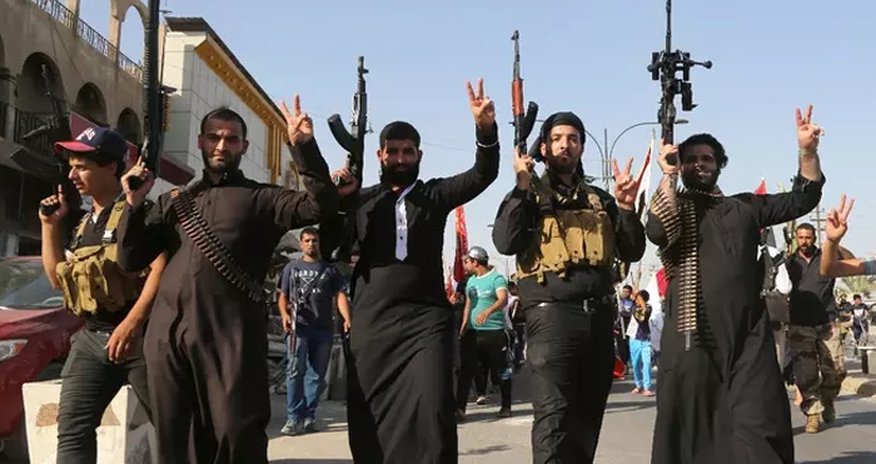
The hand of ISIS?
One clear thread connecting the murders is the barbaric and medieval mode of attack: machetes.
But who is masterminding the killings?
So-called Islamic State (ISIS) has claimed a number of the attacks through its media affiliates, but the Bangladesh government has consistently denied any ISIS presence in the country. Other attacks have been claimed by local Islamist groups. Police have said that most of the suspected attackers were members of Jamaatul Mujahideen Bangladesh, or JMB -- a banned Islamist group.
There's no clear consensus on the veracity of the claims, even amongst the region's top terror analysts.
"ISIS does not go around stabbing individuals in marketplaces," said Ajai Sahni, Executive Director of the South Asia Terrorism Portal.
Sahni said ISIS-affiliated media may be claiming some of the attacks because it makes the group's reach seem larger. "It wants to span the globe," he says. "But if ISIS is involved where is the real weaponry? Where are the trained and battle-hardened fighters?"
But terrorism expert Sajjan Gohel of the Asia-Pacific Foundation said the JMB can now be seen as closely aligned to ISIS.
"JMB has targeted foreigners, professors, and academics," he said. On the other hand, the other local terror outfit, Ansarul Bangla Team, or the ABT, has mostly targeted bloggers and atheists. Gohel saw the ABT as aligned more closely with the recently launched al Qaeda in the Indian Subcontinent (AQIS).
If Gohel is right then Bangladesh could become -- or could already be -- a battleground for a proxy war between ISIS and al Qaeda. The motive and payoff is clear: a foothold in a country with the world's fourth-largest Muslim population. It also shares a border with an even bigger prize in India.
Things could get worse. Gohel pointed to a recent issue of ISIS's online propaganda magazine, Dabiq, for clues. "ISIS specifically mentioned they want to carry out more high profile attacks in Bangladesh. The next stage could be bigger and better," says Gohel. "And Bangladesh's government is in a total state of denial."
But why machetes?
"Stabbings and hackings aren't new," said Sahni. "In a certain measure Bangladesh has long had a political culture of low grade violence. But it's now been crystallized into something much bigger -- and that's in large part because it's being associated, rightly or wrongly, with the ISIS brand."
Even the smallest of attacks have a payoff.
"For terror groups any attack is an attack worth doing," said Gohel. "It's the oxygen of publicity that fuels them."
Branding seems almost essential for smaller terror outfits looking to make a splash, said CNN's terrorism analyst Peter Bergen.
"Former members of the Taliban have also self-identified as ISIS," he pointed out, even when they have no real links to ISIS. "The ISIS connection makes them a bigger and badder version of themselves."
Politics and finger-pointing
If you ask the government, the killings have clear motives and culprits.
Talking to CNN last month, Bangladesh's Information Minister Hasanul Haq Inu pointed a finger loosely at the opposition Bangladesh Nationalist Party (BNP) and its ally Jamaat-e-Islami (JI) -- the country's largest Islamist party.
But when he talked again to CNN earlier this month, Inu had honed his accusation into a movie analogy.
"The answer is very simple," he said, responding to a question about who was masterminding the spate of ongoing attacks.
"The Producer is the BNP. The Director is JI. The small actors on the ground are ABT, JMB, and other militant Islamist networks."
The BNP's spokesman completely disagreed.
"We are a political party with democratic values and norms," said Ruhul Kabir Rizvi. "The government's main aim is to trash the opposition. They want to establish a one-party political system."
The BNP does seem decimated.
By Rizvi's account more than 2,700 BNP members have been arrested in June as part of the government's drive to put an end to the killings. In all, more than 14,000 arrests have been made, but experts say only a few hundred of those are militants.
In a press release last week Human Rights Watch called the arrests arbitrary and without proper evidence of a crime.
(CNN)
www.ann.az


Facebook
Follow us on Facebook


Similar news
Similar news

World 12:30
Iran Urges Middle East Nations to Reject US Military Support, Warns of Retaliatory Strikes











 Photo




 Video


