





Philippines' growing ISIS threat
08.07.2016 20:01


Since videos of Southeast Asian recruits fighting under the black flag of ISIS emerged two years ago, the appeal of the terror group has been gradually growing in the region.
Several militant groups in Indonesia have already sworn fealty to ISIS, as did those behind the Jakarta bombing, while in Malaysia, "lone wolf" ISIS sympathizers have been active on social media. Several hundred Southeast Asians are now in Syria and Iraq, where they have formed Katibah Nusantara, which claims to represent Southeast Asians fighting for the ISIS cause.
An upsurge in ISIS-related activity in the southern Philippines has heightened concerns that the region could soon become a de facto "wilayat," or province of the "Islamic State."
Poor governance in Southeast Asia and the inability or reluctance of political leaders to take decisive action against those that use religion to perpetuate and justify hate speech and violence has created conditions for virulent ideologies like ISIS to find appeal.
Whether it is a state-appointed mufti in Malaysia openly calling non-Malay politicians "infidels at war with Islam" without fear of sanction, or the hardline stance of the Indonesian government against minority Muslim groups, extremist and intolerant voices have been allowed to operate with impunity in countries hitherto celebrated as bastions of "moderation."
The transnational nature of the ISIS threat by definition calls for transnational responses. The Sulu archipelago, where extremist activity is concentrated, is part of a triborder area that also includes the east Malaysian state of Sabah and the Indonesian island of Sulawesi, and the waters of the Sulu and Celebes seas that separate them.
This porous and ungoverned area presents a major problem by virtue of the ease of movement for militants and terrorists across these borders. Over time, this area has also developed its own insidious political economy which involves people smuggling and arms trafficking.
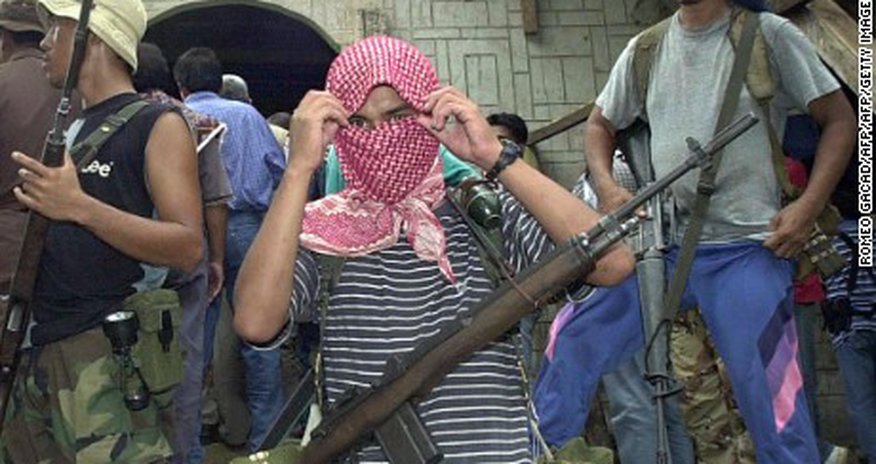
Needless to say, this plays no small part in sustaining the activities of militant and terrorist networks. While security agencies in the Philippines, Indonesia, Malaysia, and Singapore are already engaged in regular information sharing, it is clear from the persistence of this problem that this is not enough.For a long time, the Philippine security establishment has dismissed groups like Abu Sayyaf -- a few factions of which have declared allegiance to ISIS -- as a ragtag bunch of criminals and bandits. This is a dangerous underestimation of the threat.
To be sure, Abu Sayyaf is not a homogenous organization, and there are elements within it that are more interested in money than ideology. But the reality is these "bandits" have proven a formidable adversary for Philippine security forces.
The professionalism of the Philippine military remains an issue. A significant impediment to counter-insurgency and counter-terrorism operations in the south comes from the graft and corruption endemic within the military.
According to a Rand Corporation study, the U.S. provided $441 million in assistance to the Philippine military between 2002 and 2013 to fight Abu Sayyaf. Yet militant attacks during that period did not noticeably diminish by any significant measure. Abu Sayyaf today is getting stronger, not weaker.
Regional cooperation will be needed to deal with the dangers emanating from Sulu. This porous and ungoverned region continues to present a major problem and the challenge posed by the ungoverned space will require multi-national cooperation to surmount.
Because of its long history of militant activity and violence, the Philippines is often overlooked. But Southeast Asia is very much on ISIS' radar given increased attempts by local ISIS supporters and sympathizers to capture attention, and the southern Philippines is presently the weakest link in the effort to curb the growing ISIS threat.
(CNN)
www.ann.az


Telegram
Follow us on Telegram


Similar news
Similar news

World 12:30
Iran Urges Middle East Nations to Reject US Military Support, Warns of Retaliatory Strikes











 Photo




 Video


