





Prince Charles in Birmingham Koran display in UAE visit
07.11.2016 18:01


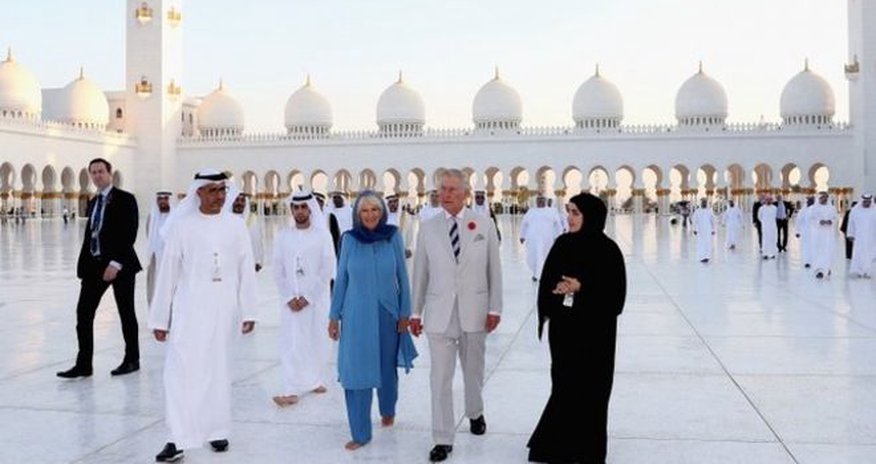
Prince Charles is to present a digital replica of the ancient Koran fragments discovered by the University of Birmingham, in a visit to the United Arab Emirates.
The copy of the manuscript will be a centrepiece of a year of cultural links between the UK and the Gulf state.
The original Koran fragment, possibly the oldest in the world, remains in the University of Birmingham.
The manuscript, at least 1,370 years old, was hailed as a major discovery.
The University of Birmingham's find came when a manuscript which it had held since the 1920s was radio-carbon dated last year and found to be much older than anyone had expected.
Symbolic return
The range of dates, established by tests carried out by the University of Oxford, showed that the manuscript was among the earliest surviving fragments of the Koran and could be the oldest in existence.
The parchment, with verses of the Koran written on either sheep or goatskin, was put on public display in Birmingham.
But for the first time, a digital replica of the manuscript has been taken out of the UK and is being put on show at events in the United Arab Emirates.
This will be part of a year of collaborations promoting cultural and economic links between the UK and the UAE, in areas such as the arts, education, sport and science.
It will also mark the symbolic return, at least in replica form, of a manuscript that was made in the Middle East in the earliest years of the Muslim faith.
An investigation into the likely origin of the Birmingham manuscript showed that it was related to a similar document held in Paris, which had been brought to Europe by a vice-consul of Napoleon.
'Huge significance'
The Birmingham manuscript had been acquired in the 1920s by Alphonse Mingana, an Assyrian, from what is now modern-day Iraq, whose collecting trips to the Middle East were funded by the Cadbury family.
The university's vice-chancellor, Sir David Eastwood, said the Birmingham Koran manuscript was of "huge significance to Muslim heritage and the academic study of Islam".
But he said that there might be other "hidden treasures" in the Mingana Collection at the university, which represented one of the biggest collections of such material in Europe.
There have been claims that the fragment in Birmingham is of even greater significance in the history of the Koran.
Jamal bin Huwaireb, managing director of the Mohammed Bin Rashid Al Maktoum Foundation, an educational foundation set up by the ruler of Dubai, said that he believes the pages discovered in Birmingham are from the first Koran commissioned by Abu Bakir Al Siddiq, the first caliph after the Prophet Muhammad, who reigned between 632 and 634.
"I personally examined this ancient parchment. In my opinion these fragments of the holy Koran were neatly written on a special material and have been produced for someone important such as the caliph.
"What is most particularly crucial is that the words in this ancient document perfectly match the words we Muslims read in the Koran today," said Mr bin Huwaireb.
(BBC)
www.ann.az


Telegram
Follow us on Telegram


Similar news
Similar news

World 12:30
Iran Urges Middle East Nations to Reject US Military Support, Warns of Retaliatory Strikes











 Photo




 Video


