





Have Russian hitmen been killing with impunity in Turkey?
13.12.2016 19:01


A series of assassinations has taken place in Turkey of men from the countries of the former USSR. There's evidence that some were carried out by killers from Russia, writes Murad Batal - including, in one case, names, photographs and a memory stick carelessly left behind for Turkish police to study.
Ruslan Israpilov knew the Russians might come for him.
"They've been preparing something," he said in a message left on a friend's voicemail in late April. "Those two men they came here and hid their car among the trees and did surveillance. They've been seen here."
Israpilov was a refugee from the conflict in Chechnya, one of a number who had moved to the tiny Turkish town of Ilimtepe, where perhaps they thought they could protect each other.
"I told those who claimed to have seen them, 'If you saw them and knew they were definitely Russians, why didn't you catch them?'" he said on the voicemail.
But two weeks later they caught him. At the age of 46, Ruslan Israpilov was shot in cold blood at the front door of his flat.
"I was terrified when I heard the gunfire and as I ran out of the kitchen I saw my son shouting, 'Oh daddy!'" says Israpilov's wife, Petima.
"There was blood everywhere… He was shot in the head, the neck and heart. They opened fire as soon as he opened the door. It is all in the hands of Allah. May he take his revenge!"
As a young man in the 1990s, Israpilov had fought with thousands of other Chechens to repel Russian forces from their land - for many Chechens it was a war of independence, though Russia ultimately crushed the Chechen fighters, and made one of them, Ramzan Kadyrov, head of the republic.
To judge from his Facebook page, Israpilov may have had links to the continuing Chechen resistance movement. One photograph shows him at Istanbul airport holding a passport issued by the non-existent independent state of Chechnya.
Exactly why Israpilov was killed is not known. What is known is that this was just the latest in a string of 12 assassinations of men from the former Soviet Union - Chechens, Uzbeks and Tajiks - who had taken refuge in Turkey.
Approximately six months earlier, on 1 November 2015, another Chechen, Abdulwahid Edelgiriev, was about to take his niece shopping in the Istanbul suburb of Keyesehir.
As he set off for the mall another car blocked his path. A man then leaped out and shot through the window of Edelgiriev's car, but missed.
Edelgiriev ran down a path back towards his home, pursued by the attackers. They felled him with a shot, and then stabbed him in the neck, leaving him to bleed to death.
Edelgiriev had been one of those Chechens who continued to fight for an independent, and Islamic, Chechnya, even after most Chechen rebel units had been destroyed, or turned and recruited by the notoriously brutal Kadyrov.
He remained holed up in the mountains until 2008 when he stepped on a trip wire, triggering an explosion that left his foot badly wounded. Then, after treatment in Turkey, he joined thousands of other Islamist militants from the former USSR in Syria, allying himself with the local affiliate of al-Qaeda, Jabhat al-Nusra.
While many died in Syria, Edelgiriev returned to Turkey and is known to have been part of a group that had plotted to resume jihad on Russian territory.
It would be in Russia's interests for such men to be eliminated, but there is another reason why Russian might wish to see the end of Edelgiriev, as he was suspected in Moscow of having played a key role in a plot to kill Russian President Vladimir Putin.
When an explosion struck an apartment block in the Ukrainian port of Odessa in 2012, news reports suggested it was the result of an unsuccessful experiment by would-be bomb-makers. A number of men were arrested, including one who stated on television that the ultimate aim was to try to assassinate Vladimir Putin, though he later retracted his confession. Another later named Edelgiriev as the man who had hatched the plan and provided the explosives.
Vladimir Putin then issued a veiled warning.
"They never got in my way and they never will," the president said of the alleged plotters. "Listen, if you live with that all the time and are constantly afraid, that isn't a life. It's they who should be afraid of us."
If the murder of Alexander Litvinenko with radioactive polonium in London 10 years ago is the most shocking example of an assassination apparently carried out by Russian agents on foreign soil, it is not the only one.
In 2004, a former acting president of Chechnya, Zelimkhan Yandarbiyev, was killed when his car exploded in Qatar.
A Qatari court found two Russian military intelligence agents guilty of his murder before allowing them to fly home to serve their sentences in Russia - where a red carpet was laid on the steps leading down to the tarmac.
"This is a regime that believes, firstly, that it has the right to act abroad in the interests of its own security," says Prof Mark Galeotti of the Institute of International Relations in Prague, who has spent more than 20 years researching Russian intelligence.
"Secondly, it has a very bloody approach to dealing with threats against it - it has no problem with killing people."
Few of the killings in Turkey have been satisfactorily solved, but leaked Turkish police documents obtained by the BBC show that one triple assassination in September 2011 left many clues.
The victims were Chechen militants accused of the bloody bombing of Moscow's Domodedovo airport earlier that year - an attack in which 37 people died and 170 were injured. All three died on the spot in the Istanbul district of Zeytinburnu.
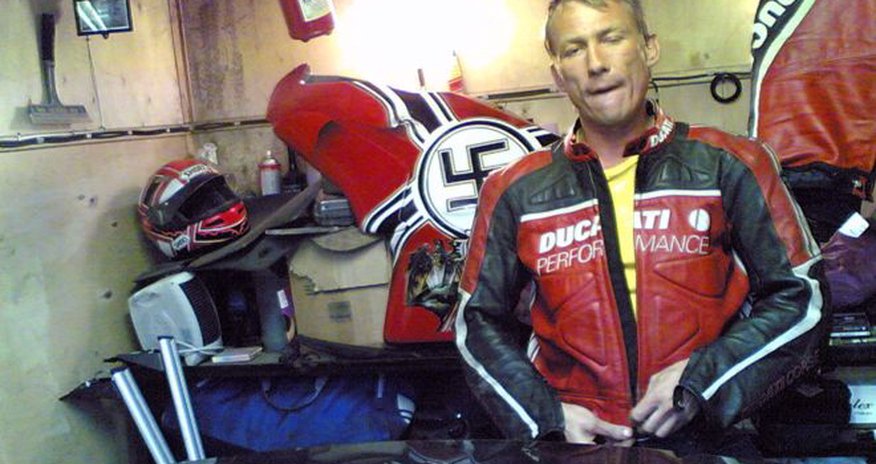
But while the killing itself may have been carried out professionally, the five hitmen left a wealth of information in a hired car, including their names and photos, and a USB stick illustrating their lifestyle, from the predictable - fast cars, male friendship and whisky - to the bizarre… a motorbike decorated with Nazi insignia.
All of the men came from Russia.
The first time they hired a car, they asked for a white, or light-coloured one. It had to be automatic, and they insisted that it should not have GPS. But in fact it turned out that the car did have a built-in navigation system, and the hitmen failed to disable it. As a result, police were later able to establish exactly where they had been during the preceding two weeks - and to find plenty of CCTV footage of their activities.
(BBС)
www.ann.az


Instagram
Follow us on Instagram
Similar news
Similar news

World 12:30
Iran Urges Middle East Nations to Reject US Military Support, Warns of Retaliatory Strikes











 Photo




 Video


