





Philae lander is 'Go' for attempted comet touchdown
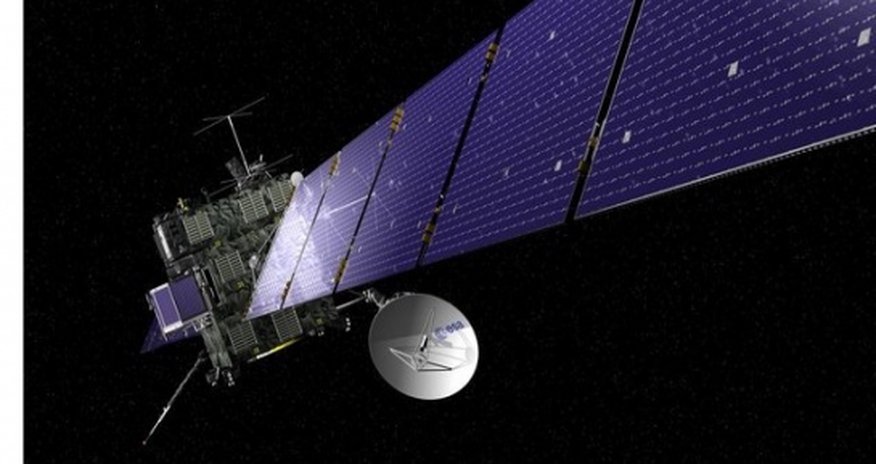


(CNN) -- Rosetta mission controllers have made the first call to "Go" for an attempted landing on Comet 67P, the European Space Agency (ESA) announced in a webcast Tuesday.
If it succeeds it will be the first time a spacecraft has landed on a comet.
Scientists say there are still a few more key decisions to take in the coming hours before a planned separation of the landing craft Philae from the mother ship Rosetta on Wednesday.
Philae, which has spent 10 years fixed to the side of Rosetta during the journey across the solar system, cannot be steered once released.
Before Tuesday's announcement, ESA lander system engineer Laurence O'Rourke told CNN that the orbiter Rosetta has to be in the right position to allow the craft to "free fall" on the correct trajectory to the chosen landing site.
Scientists are hoping the probe will help us learn a lot more about the composition of comets and how they react when they get close to the Sun.
Weighing in at 220 pounds, it might be the size of a domestic washing machine but Philae is considerably smarter.
It is equipped with an array of experiments to photograph and test the surface of Comet 67P as well as finding out what happens when the roasting effect of the Sun drives off gas and dust.
But first it has to reach the landing site -- and there's a lot that could go wrong.
O'Rourke explained that hours before separation, Philae's on-board batteries are prepared and a fly wheel is started to give the probe stability on its journey to the comet surface. Without the gyroscopic effect of the fly wheel there's a danger that the lander could turn end over end, he said.
To release Philae, wax over a latch is melted and the lander is automatically unscrewed. If it fails there's a back-up plan. A pyrotechnic charge will fire and push the lander away at just the right speed to set Philae on the right course, O'Rourke said.














 Photo




 Video


