





Huge sea creatures wash up across South Coast - PHOTO
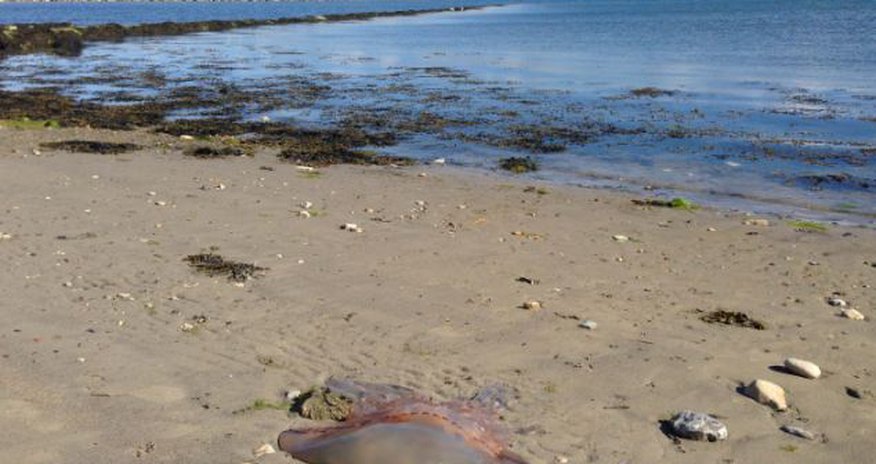


But in fact this giant jellyfish is harmless to humans – and a long way from home. Usually found in the Atlantic or the Mediterranean, the creature was spotted by wildlife photographer Steve Trewhella in Portland, Dorset, and is one of ten seen recently along the south coast.Experts say there could be an influx of these barrel jellyfish – up to 3ft 2in in diameter – over the next few months due to warmer weather.Richard Harrington of the Marine Conservation Society said: ‘Although this species is harmless … we still advise the public not to touch them.’It comes just days after a jellyfish the size of a dustbin lid was sighted on the island by dog walker Suzanne Sheldon.Following her discovery, Ms Sheldon, 47, said: 'It was at least three feet in width and was very bulky too. It was the largest jellyfish I had ever seen.'Experts have warned that there could be an influx of the sea creatures as the weather warms up.Forecasters expect high pressure to take hold later in May - sending temperatures soaring above 20C.In recent weeks, up to 10 barrel jellyfish have been spotted washed up on beaches around the South Coast.Mr Harrington added: 'This is an Atlantic species and are sometimes found washed up but we still advise the public not to touch them.'But Mr Trewhella believes the creatures have come ashore because of strong winds and high tides.'It's not that unusual to see jellyfish, they aren't particularly common in Dorset but we do see them every once in a while,' said the photographer.'Jellyfish are a form of plankton, and the warm weather means we might see an increase in the levels of plankton.'This is something that occurs around this time every year and it is known as the plankton boom.'However, it is not the warm weather that causes jellyfish to wash up, instead it's the wind and tides that leave them stranded on beaches.'I think we will see more strandings because of the on-shore winds and the tides, but people should be careful not to touch them.'Barrel jellyfish - Rhizostoma pulmo in Latin - are often known as dustbin-lid jellyfish because of their enormous size.They are commonly found in the north east Atlantic, Adriatic, and Mediterranean sea and are prey to leatherback turtles.Experts have warned that some of the jellyfish can sting and anyone affected should seek medical attention. (dailymail.co.uk)Bakudaily.az














 Photo




 Video


