





Finances of jihad: How extremist groups raise money
13.12.2014 15:00


Twelve months ago, the group now known as Islamic State (IS) was little recognised on the international stage beyond those inspired to travel and join the group as fighters or those in the security and academic worlds monitoring developments in Syria and Iraq.
Even at its emergence, it was dismissed as just another of the multitude taking advantage of the chaos created in Syria by the wide-ranging conflict with President Bashar al-Assad.
In January 2014, US President Barack Obama downplayed the capabilities and threats posed by those flying the al-Qaeda flag in Falluja and elsewhere across Iraq and Syria.
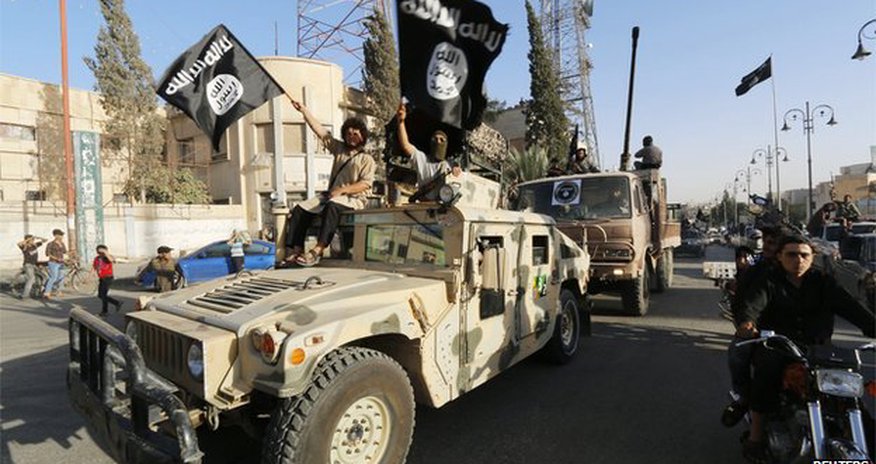
But within a few months, IS controlled a vast and valuable swathe of territory across northern Syria and Iraq.
Former US Secretary of Defence Chuck Hagel described IS as being as "sophisticated and well-funded as any group that we have seen". "They're beyond just a terrorist group… they are tremendously well funded," he said.
New realities
More than with any other militant group perhaps, the focus of the international community's attention is on the finances of IS - the revenue it earns from oil, taxation, extortion and looting.
The US-led coalition has directed a considerable portion of its air strike effort against the oil refineries and smuggling routes believed to be the mainstay of the group's financial survival in the belief that disrupting funding sources will ultimately precipitate its demise.
The importance of financing in conflict is as old as conflict itself. The Roman orator Marcus Tullius Cicero observed that "the sinews of war [are] a limitless supply of money."
More recently, during the Cold War, states sponsored political violence by funding and supporting proxies.
However, the end of the Cold War, and the use of UN Security Council resolutions against countries such as Libya and Sudan, saw a dramatic decline in state-sponsored terrorism.
Whilst organisations such as Hezbollah continue to operate with state backing, post-Cold War terrorist organisations have mostly been unable to rely on state sponsorship, thus needing to source their own financing.
Skilful financial management is at the heart of the success of any terrorist or insurgent organisation - it represents their lifeblood but is also one of their most significant vulnerabilities.
Donors
Securing and maintaining reliable funding is the key to moving from fringe radical group to recognised terrorist organisation - from a hand-to-mouth existence to a more planned and organised model.
Successful groups are often defined as much by their skills as financial managers as they are by their military expertise and ability to recruit fighters.
In general, terrorist groups can draw on financing from two primary sources
Internally, funds are generated by taxation of people, businesses and transport routes; proceeds from kidnap and ransom; and profits from trade
External funding is provided by donors sympathetic to the cause, be they wealthy supporters (often from Gulf state countries, sometimes referred to as the "Golden Chain") or members of the diaspora community
Donations are also sometimes transferred between like-minded terrorist groups. For example, the Nigerian group Boko Haram reportedly received $250,000 from al-Qaeda in the Islamic Maghreb (AQIM) in 2012.
In a letter from 2005, al-Qaeda's former deputy leader, Ayman al-Zawahiri, called upon al-Qaeda in Iraq to transfer $100,000 (£63,700) because many of its own funding lines had been cut.
Whilst donations can provide a source of initial "seed-funding", they are vulnerable to disruption by the authorities and the supply is unreliable.
To establish financial independence, terrorist groups need to move from primarily external funding to internal, self-generated funding that is more difficult for the international community to disrupt.
Drugs
Al-Shabab in Somalia is a good case in point. Whilst the group receives some limited funding from external sources, it has developed a highly effective charcoal export business which generates up to $80m a year, according to the UN.
Al-Shabab has also mastered another funding tool - business, personal and transport tax. Like IS, al-Shabab controls territory and population, operating a form of quasi-government in the areas under its control - raising taxes and offering some services, particularly security and justice, in return.
(BBC)
ANN.Az


Youtube
Follow us on Youtube


Similar news
Similar news

World 12:30
Iran Urges Middle East Nations to Reject US Military Support, Warns of Retaliatory Strikes











 Photo




 Video


