





Ukraine crisis: Monitors to try to reach Debaltseve
29.05.2020 11:39


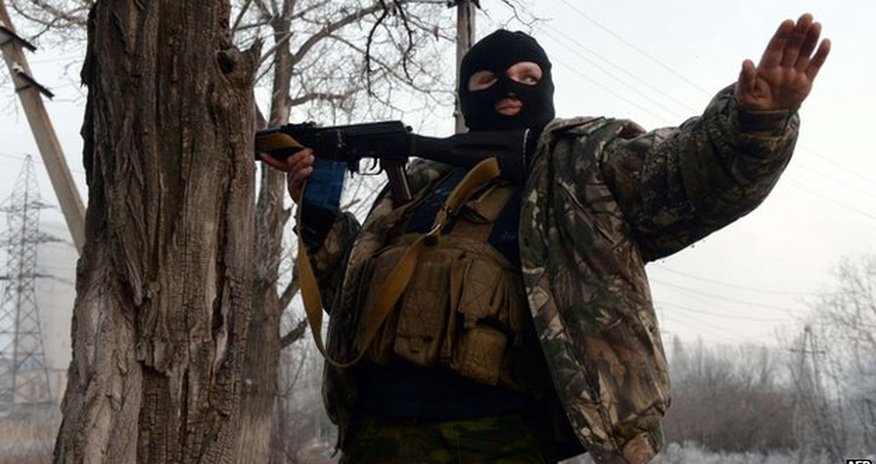
Observers are to try again to reach the besieged Ukrainian town of Debaltseve, where fighting has continued despite a ceasefire.
The OSCE were denied access to Debaltseve by pro-Russian rebels on Sunday, the European security group said.
Separatists have said they have the town encircled so it should be considered theirs.
In other areas of Ukraine the ceasefire has broadly been observed.
But the exception has been Debaltseve, a key transport hub, which has seen some of the fiercest fighting in recent weeks.
Although the fighting was reported to have lowered in intensity, shelling continued through Sunday.
"Of course we can open fire (on Debaltseve). It is our territory," Eduard Basurin, a rebel commander, told Reuters.
"The territory is internal, ours. And internal is internal. But along the line of confrontation there is no shooting."
Meanwhile, a military spokesman said Ukrainian troops had come under fire 60 times in the hours after the truce came into force, AFP reports.
But both sides have said that in most of the country, the ceasefire held on Sunday.
Crucial period
Monitors from the Organization for Security and Cooperation in Europe (OSCE) said that as of Sunday evening, "the ceasefire had been holding in the first 18 hours, with some exceptions, notably in Debaltseve, Raihorodka and Luhansk city".
The monitoring mission said that on Monday it would "further seek full access, including to Debaltseve, and areas where violations have been reported".
Despite the ceasefire, the EU is expected to proceed with adding 19 new names of Russians and Ukrainians subject to travel bans and asset freezes for their roles in the conflict.
European leaders have warned Russia that it could face additional sanctions if the 13-point Minsk ceasefire agreement is not respected.
Ukraine and the West accuse Russia of sending troops and weapons to help the separatists in Ukraine's eastern Donetsk and Luhansk regions - a claim the Kremlin vehemently denies.
On Sunday leaders of the four countries that negotiated the truce last week - France, Germany, Ukraine and Russia - held further talks, agreeing to move towards implementing the next stage of the latest Minsk deal.
According to the agreement, cessation of hostilities is only the first step and should be followed on day two of the ceasefire by the start of the withdrawal of heavy weapons to create two demilitarised buffer zones between 50-140km (30-85 miles) wide.
Analysts point out that previous ceasefires initially appeared to be holding but eventually failed, and say the next 48 hours are critical.
Officials say more than 5,400 people have been killed since the conflict erupted in eastern Ukraine in April, but the UN believes the actual death toll to be much higher.
(BBC)
ANN.Az


Telegram
Follow us on Telegram


Similar news
Similar news
World 12:30
Iran Urges Middle East Nations to Reject US Military Support, Warns of Retaliatory Strikes





 Photo




 Video


