





Iraqis may fear Shi’ite militias more than Islamic State
21.02.2015 14:20


Last week, gunmen at a checkpoint in southern Baghdad ambushed a convoy carrying Sheikh Qassem al-Janabi, a prominent Sunni tribal leader. The sheikh was abducted, along with his son and several bodyguards, and their bodies were later dumped near a bridge in a Shi’ite neighborhood of the capital — a calling card of militias that carried out countless extrajudicial killings during Iraq’s civil war.
Sunni leaders quickly blamed Shi’ite militias for the murder of Janabi, who had tried to promote reconciliation between Shi’ite and Sunni factions. Even if Shi’ite militias were not responsible for the attack, they are hindering efforts to reduce sectarian tensions and allow the central government to reassure Iraq’s disillusioned Sunni minority.
If Prime Minister Haider al-Abadi has any hope of repairing relations with Sunnis and persuading them to turn against militants of Islamic State, he must rein in the Shi’ite militias that are increasingly taking the lead in the fight against the Sunni jihadists — and in the process further alienating the Sunni community by committing new atrocities.
In response to Janabi’s killing, the two main parliamentary blocs that include Sunni lawmakers announced that they would boycott parliament for at least a week, while Abadi’s government investigates the sheikh’s murder. The roughly 75 lawmakers in the two blocs, which include some Shi’ite members, blamed Abadi and his cabinet for "the breakdown of security, and letting loose killers and outlaws to commit crimes of ethnic cleansing.”
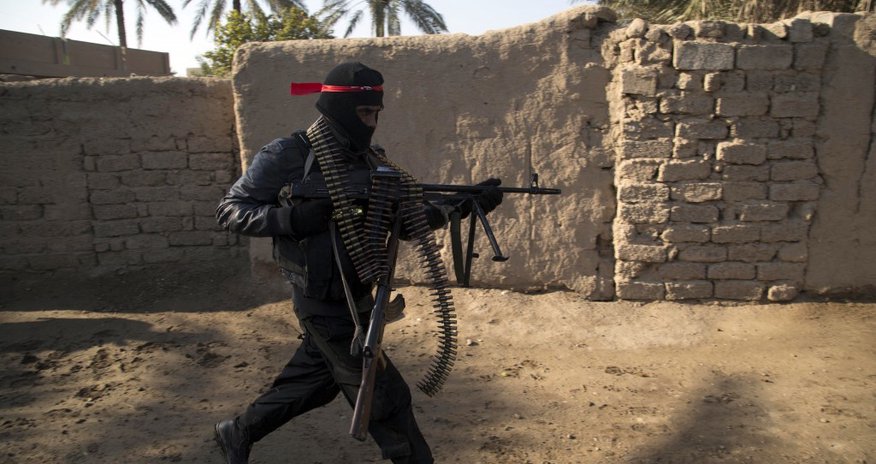
But supporters of the Shi’ite militias, which have an estimated 100,000 to 120,000 armed men, argue they have been critical in driving back Islamic State and its allies since the groups routed Iraqi security forces in the northern city of Mosul last summer.
Abadi needs to assure Iraq’s Sunnis that he will be able to reverse the legacy of his divisive and sectarian predecessor, Nouri al-Maliki. Since Abadi took office in September, Sunni political leaders have made several demands: amnesty for tens of thousands of Sunnis imprisoned, in many cases without judicial review, by Maliki’s regime in the name of fighting terrorism; greater power in the new government; an end to aerial bombardment of Sunni towns, and a more significant role in the Iraqi security forces, which Maliki cleansed of many senior Sunni officers.
Abadi has responded to some of the demands. He released prisoners and ordered an end to Iraqi air force bombings in Sunni areas. But for the most part, the Shi’ite militias are outside his control. Many Sunnis cringe at the memories evoked by the reestablishment of Shi’ite militias, which carried out widespread kidnappings, torture and killings of Sunnis during the sectarian war that raged in Iraq from 2005 through 2008.
A recent report by Human Rights Watch noted that as Shi’ite militias carried out new offensives against Islamic State in recent months, they have escalated their abuses in Sunni areas. The militias have been accused of forcing thousands of Sunnis out of their homes, kidnapping or detaining hundreds of residents and summarily executing 72 civilians in Diyala province.
In December, Abadi published an op-ed article in the Wall Street Journal pledging to bring "all armed groups under state control. No armed groups or militias will work outside or parallel to the Iraqi security forces.” But so far, Abadi has failed to live up to his promise and, by some measures, the militias are now the dominant military force fighting Islamic State, having surpassed the demoralized Iraqi army.
Many of the Shi’ite militias depend on Iran for their weapons, funding and training. Since Islamic State swept through northern Iraq in June, Tehran has mobilized to protect the Shi’ite-led Iraqi government from the jihadist threat. General Qasem Soleimani, commander of the Al-Quds Force of the Iranian Revolutionary Guard Corps, traveled to Baghdad at the start of the crisis to coordinate the defense of the capital with Iraqi politicians and military officials.
Soleimani also directed Iranian-trained Shi’ite militias — including the Badr Brigade and the League of the Righteous, two notorious militias responsible for widespread atrocities against Sunnis — in the fight against Islamic State.
Iraq’s top Shi’ite cleric, Grand Ayatollah Ali al-Sistani, has also emerged as a significant force in the effort to rally Shi’ites against the jihadists. Sistani, who usually urges clerics to avoid direct political participation, has stepped into the political arena forcefully since the fall of Mosul in early June. Three days after Mosul fell, Sistani issued a call to arms that urged all able-bodied Iraqi men to join the security forces and stop Islamic State’s advance.
The response was immediate. Tens of thousands of Shi’ite volunteers showed up at recruiting centers to sign up for the Iraq security forces, or the militias. Even though Sistani urged Iraqis to fight under the command of the central government, the Shi’ite militias quickly took center stage. In a sign of his alarm at transgressions by Shi’ite forces, Sistani issued a new statement on Feb. 12 that called on the security forces and militias not to commit atrocities against civilians.
The militias’ growing strength threatens to undermine Abadi’s authority and one of his most important goals: to assure Sunnis that the central government will protect their interests. Abadi can insist that the Iranian regime, which holds the most sway over the Shi’ite militias as their main source of arms and funding, pressure the militia leaders to fall under the command of the Iraqi security forces. Abadi can also follow through on his pledge to prosecute militia fighters and members of the security forces who have committed atrocities. This would become a deterrent against future transgressions.
If Abadi and Sistani cannot restrain the militias, Iraq will be doomed to an endless cycle of sectarian bloodletting.
(http://blogs.reuters.com/)
ANN.Az


Youtube
Follow us on Youtube


Similar news
Similar news

World 12:30
Iran Urges Middle East Nations to Reject US Military Support, Warns of Retaliatory Strikes











 Photo




 Video


