





US nuclear fears block Intel China supercomputer update
13.04.2015 21:30


The US government has refused to let Intel help China update the world's biggest supercomputer.
Intel applied for a licence to export tens of thousands of chips to update the Tianhe-2 computer.
The Department of Commerce refused, saying it was concerned about nuclear research being done with the machine.
Separately, Intel has signed a $200m (£136m) deal with the US government to build a massive supercomputer at one of its national laboratories.
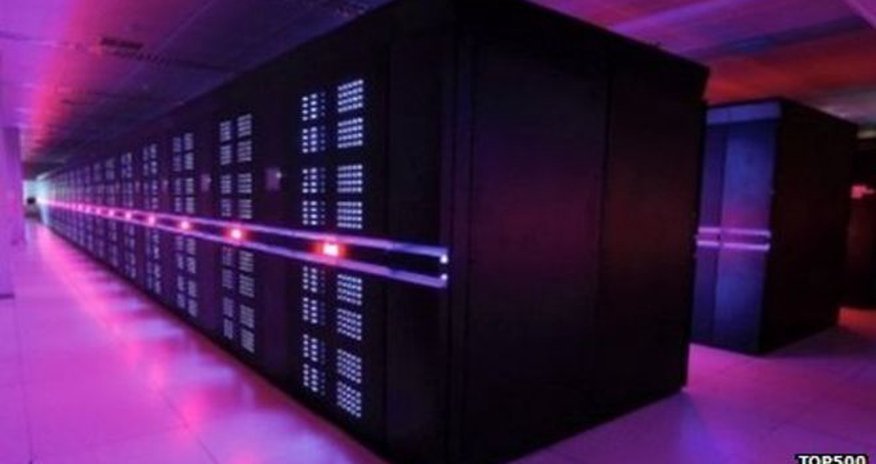
The Tianhe-2 uses 80,000 Intel Xeon chips to generate a computational capacity of more than 33 petaflops. A petaflop is equal to about one quadrillion calculations per second.
According to the Top 500, an organisation that monitors supercomputers, the Tianhe-2 has been the world's most powerful machine for the past 18 months.
This year the Chinese machine was due to undergo a series of upgrades to boost its number-crunching abilities past 110 petaflops. The upgrades would depend largely on new Intel Xeon chips. The chipmaker informed US authorities of its involvement with the upgrade programme and was told to apply for an export licence.
'In compliance'
In a notice published online the US Department of Commerce said it refused Intel's application to export the chips for Tianhe-2 and three other Chinese supercomputers because the machines were being used for "nuclear explosive activities". The relevant section of US export regulations reveals that this covers technologies used in the "design, development or fabrication" of nuclear weapons.
The notice added that the four institutions where the supercomputers would be located were deemed to be "acting contrary to the national security or foreign policy interests of the United States".
In a statement given to the IDG news wire, the chipmaker said: "Intel complied with the notification and applied for the licence, which was denied. We are in compliance with the US law."
China is now believed to be accelerating its own home-grown chipmaking efforts to boost the power of the four supercomputers and complete the upgrade programme.
Although Intel has been denied the chance to sell its Xeon chips to China, the company has signed a large deal to build the Aurora supercomputer at the Argonne National Laboratory in Illinois. When finished that machine is expected to have a peak performance of 180 petaflops.
(BBC)
ANN.Az
www.ann.az


Telegram
Follow us on Telegram


Similar news
Similar news

World 12:30
Iran Urges Middle East Nations to Reject US Military Support, Warns of Retaliatory Strikes











 Photo




 Video


