





Where your computer goes to die
29.05.2020 09:45


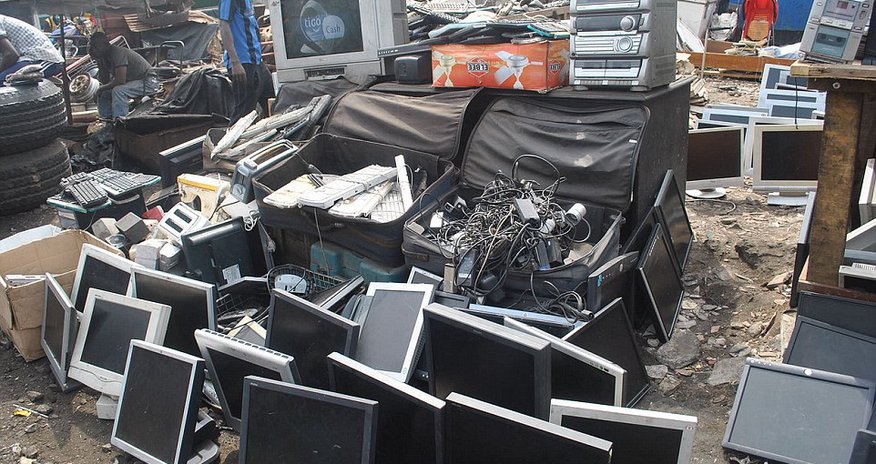
Harrowing images reveal one of west-Africa's vast electronic graveyards where 'millions of tonnes' of discarded appliances from all over the world - including the UK - are being dumped every year.
Thousands of broken televisions, computers, microwaves and refrigerators are being illegally exported to African countries and dumped gigantic landfills like Agbogbloshie in Ghana because it costs less than recycling them in their countries of origin, campaigners claim.
41 million tonnes of 'e-waste' worth over £34billion were discarded globally in 2014, according to a shocking report by United Nations University who claim only 6 million tonnes of that was recycled properly.
The UK contributed 1.5 million tonnes of waste to the staggering 11.6 Europe generated last year - putting it behind only Germany as the continent's greatest contributor.
That dwarfs the 1.9 million tonnes produced by the whole of Africa and yet the continent's western nations have become a dumping ground for the world's defunct products.
Some of the appliances even leak toxic elements such as lead and mercury which harms the environment and the young men who trawl through the broken goods hoping to find something worth selling.
The shocking images taken by e-waste campaigners QAMP reveal how countless household appliances have contaminated what was once the 'pastoral landscape' of Agbogbloshie in Accra.
'Developed countries export millions of tonnes of electronic waste annually into developing countries such as Ghana,' the group based in the country claims on its website.
Photographs show young boys trawling through the western world's scraps, dismantling old stereos and burning components to recover scrap metal - which they will sell for small amounts of money.
Transporting broken or expired electronics to Africa is illegal but brokers exploit a loophole by fraudulently labelling the items as reusable, according to the Head of United Nations University who believes Africa is becoming 'a graveyard for e-waste'.
When massive containers arrive in Ghana and Nigeria, they are trucked to remote locations where the locals can buy the products directly without testing them to later sell in markets, Dr Ruediger Kuehr told MailOnline
He believes legal shipments can help close the digital divide between Africa and the west but said: 'If it turns out that this equipment arriving in Africa is no longer of use, there is no longer a market existing or that they are getting real waste… then we are having a real issue.'
This sometimes-illegal and environmentally damaging practice plaguing Ghana is driven by cheap dumping prices in comparison to the cost of recycling in the countries where it comes from.
The electronic waste leaks lead, mercury, arsenic, zinc and flame-retardants. They've been found in toxic concentrations in the air, water, and even on the fruits and vegetables at the wholesale market
Yepoka Yeebo, Photographer
Dr Ruediger Kuehr said: 'These shipments are taking place and increasingly so. The reasoning behind it is quite simple - economic and financial.
'Recycling in the European Union and the UK costs money. So if a broker successfully collects enough material and sends it to Africa, it could be in their interest because in people in Africa are still paying for this.'
The 'recycling' of e-waste in Agbogbloshie is a dangerous business which often involves burning it in unmonitored landfill sites, according to UNU.
The waste discarded in 2014 contained around 300 tonnes of gold, 16 million tonnes of iron and nearly two million tonnes of copper as well as significant amounts of silver, aluminium and palladium.
And alarmingly, it also contained 'substantial amounts' of life-threatening toxic material like mercury and cadmium which can cause organ failure and severe mental impairment if they pollute the local water supply.
In the deadly fields of Agbogbloshie, photographer Yepoka Yeebo has seen young men braving toxic fumes and explosive appliances in what she deems 'the chaotic heart of one of west Africa's biggest economies'.
She has witnessed boys as young as 14 trawling barefoot through acres of what could be deadly waste material which may cause them irreparable harm.
Yepoka adds: 'The electronic waste leaks lead, mercury, arsenic, zinc and flame-retardants. They've been found in toxic concentrations in the air, water, and even on the fruits and vegetables at the wholesale market.'
(dailymail.co.uk)


www.ann.az


Youtube
Follow us on Youtube


Similar news
Similar news

World 12:30
Iran Urges Middle East Nations to Reject US Military Support, Warns of Retaliatory Strikes











 Photo




 Video


