





What became of Beirut's 1960s jet-set playgrounds
21.05.2015 18:00


For several decades the name "Beirut" has conjured images of devastation and danger.
But not so long ago, it enjoyed a reputation as a playground for the world's most affluent tourists.
In the 1950s, a sudden influx of foreign money led to the creation of the Middle East's very own piece of La Dolce Vita on the Mediterranean.
New five-star hotels sprang up on the Ain el Mreisse seafront, nightclubs moved into Rue de Phenicie (Les Caves du Roy was said to be a particularly infamous den of iniquity) and restaurants opened to serve the celebrities and royals that began arriving.
On nearby Hamra Street, intellectuals from the nearby American University of Beirut and leftist politicians and activists would argue and plan over countless cigarettes in the dozens of cafes established in the 50s and 60s.
The most popular ones -- Cafe Wimpy, the Horseshoe, Cafe de Paris -- have since been turned into multinational chains, but what is still one of Beirut's most vital thoroughfares remains lined with al fresco smokers and espresso drinkers.
It's still possible to visit some of the hotspots of 60s Beirut for a sunbathe and a cocktail, and imagine that really is Brigitte Bardot and Omar Sharif you're seeing at the corner table.
Saint George Yacht Club & Marina
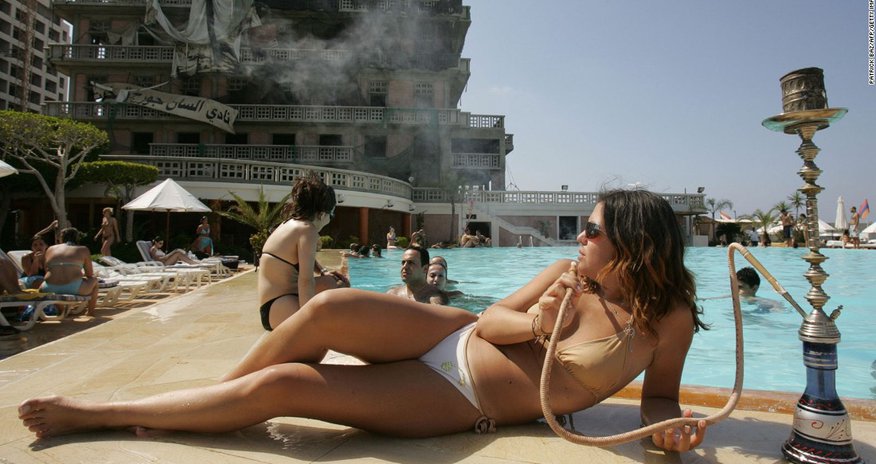
The Saint George was the first beach club to open on the coast of Beirut in the 1930s, and its attached hotel was host to Beirut's most recognizable tourists, including Bardot, Peter O'Toole (on breaks from filming "Lawrence of Arabia" in Jordan), Egypt's King Farouk and many more.
The hotel restaurant and bar, with its semicircular terrace looking over the pool and beach below, were ground zero for the city's foreign correspondents, either resident or passing through, looking for scoops or a break from the ascetic lifestyle elsewhere in the still-developing Middle East.
Subsequently, the bar cultivated the reputation of being a nest of spies.
Kim Philby, the infamous British MI6 officer who spied for the Soviets for over 30 years, is said to have dropped by each afternoon for five or six cocktails before tottering home to his flat on nearby Rue Kantari.
Sadly though, its history is the most interesting thing about the Saint George today.
The hotel was gutted during the 1975-1990 civil war, and an ongoing legal dispute with government-backed development and construction giant Solidere has interfered with reconstruction efforts.
Its owner Fadi Khoury, whose father ran the hotel before him, admits that preserving the past is not a priority at present.
"I'm so wrapped up in the legal battle," he says, "it's hard for me to remember the history."
A five-story banner on the hotel reading "Stop Solidere" casts a shadow over the otherwise lovely pools and bar, where beefcake U.N. soldiers and private security contractors can be seen sunning themselves on days off.
Still, a drink overlooking what remains of the beach that helped kick off Beirut's glamorous and hedonistic 60s reputation is well worth the trip.
(CNN)
www.ann.az


Twitter
Follow us on Twitter

Similar news
Similar news
World 12:30
Iran Urges Middle East Nations to Reject US Military Support, Warns of Retaliatory Strikes





 Photo




 Video


