





Plunged into uncertainty, Turkey could face early election
29.05.2020 08:09


Turkey faced the prospect of weeks of political turmoil after the ruling AK Party lost its parliamentary majority in weekend polls, dealing a blow to President Tayyip Erdogan's ambitions to acquire sweeping new powers.
Instead of the two-thirds majority he had wanted to change the constitution and create a new presidential republic, the AK Party, while remaining the biggest party, failed even to achieve a simple majority. The outcome augurs weeks of unpredictability as parties vie to form a coalition and possible early elections.
The result could also prompt some soul searching in the AKP, Turkey's dominant political movement for more than a decade, where in recent years religious conservatives, with Erdogan's support, have gained the ascendancy at the expense of center-right and liberal elements.
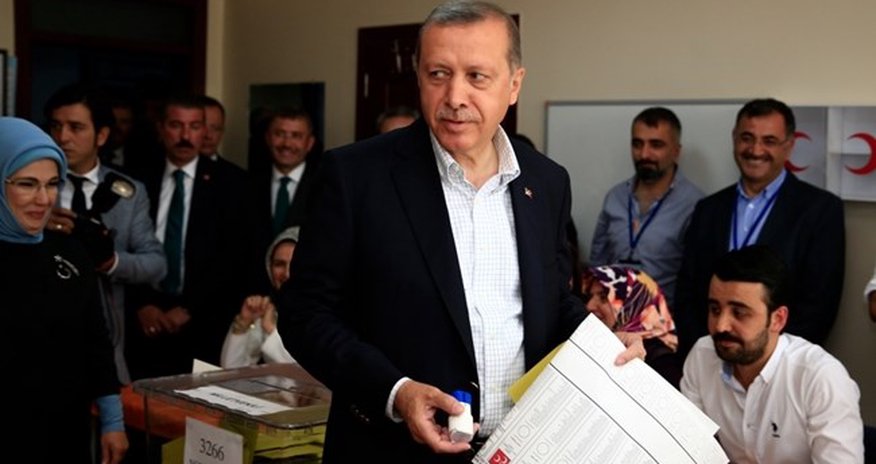
Erdogan, strident in his attacks on opponents he has in the past accused of betraying Turkey, seemed conciliatory in first comments after the poll - a stark contrast to his triumphalist appearances after recent local and presidential elections
"Our nation's opinion is above everything else," he said. "I believe the results, which do not give the opportunity to any party to form a single party government, will be assessed healthily and realistically by every party.
The precarious outcome may stir concern in Western capitals that see NATO member Turkey as an important island of political stability bordering Syria, Iraq and Iran. Nearly two million Syrian refugees now live in Turkish camps, Islamic State militants stand on the country's borders and the United States keeps an air base at Incirlik, in south-east Turkey
The uncertainty also triggered a sharp sell-off in Turkish assets, reviving for some memories of fractious, short-lived coalition governments that battered the economy in the 1990s and triggered a string of army coups in the second half of the 20th century.
The lira slid to a record low of 2.8 to the dollar, the Istanbul stock index tumbled 8 percent, and the 10-year benchmark bond yield surged to within a whisker of 10 percent.
Erdogan, Turkey's most popular modern leader but not one used to compromise and negotiation, had hoped a crushing victory for the AKP would allow it to change the constitution and create a more powerful U.S.-style presidency.
The swing away from the president and AK may have had numerous causes.
Some voters may have been disillusioned by Erdogan's increasingly bellicose tone, others wary of his plans to amass further power or alarmed by recent graft scandals around the government that Erdogan ascribed to attempts to topple him and which he cited in launching a purge of the judiciary.
Decisive was the success of a pro-Kurdish opposition party campaigning on a broad leftist agenda that surged ahead to enter parliament.
EARLY ELECTION POSSIBLE
Deputy Prime Minister Numan Kurtulmus told reporters the AKP would try to form a coalition government as its first option and was optimistic that it would be able to do so, but added that an early election could be on the cards if it failed.
A coalition without the AKP, he said, was impossible.
The right-wing Nationalist Movement Party (MHP) is seen as its most likely partner. But its leader Devlet Bahceli all but ruled out such a deal on Sunday, saying Turkey should hold a new election if the ruling party was unable to agree a coalition with other opposition groups.
(reuters.com)
www.ann.az


Facebook
Follow us on Facebook


Similar news
Similar news

World 12:30
Iran Urges Middle East Nations to Reject US Military Support, Warns of Retaliatory Strikes











 Photo




 Video


